Not seeing the wood for the trees

Recently a friend asked if there is an idiom in English like I cannot see the wood for the trees, which refers to hearing. We couldn’t think of any, but maybe you can.

This expression means that you “cannot see, understand, or focus on a situation in its entirety due to being preoccupied with minor details” [source]. Apparently in North America the equivalent is “I cannot see the forest for the trees”. The wood refers to a small forest, rather than the material that comes from trees.

Here be trees!

There is an equivalent idiom in Esperanto: Li en arbaro sidas kaj arbojn ne vidas (He sits in the forest and doesn’t see trees).

The equvalent in Italian is avere gli occhi foderati di prociutto (to have one’s eyes lined with ham).

Are there similar idioms in other languages?

In Russian the word for tree is дерево (derevo), which came up in my Russian lessons today. It is comes from the Proto-Slavic *dervo (tree), from Proto-Indo-European *dóru (tree), which is also the root of the English word tree, and of the Welsh derw and the Cornish derow (oak trees) [source].

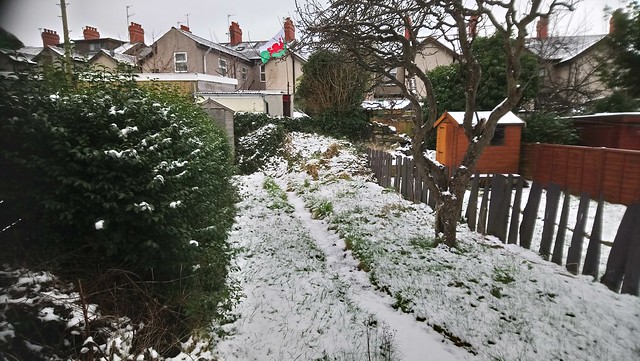
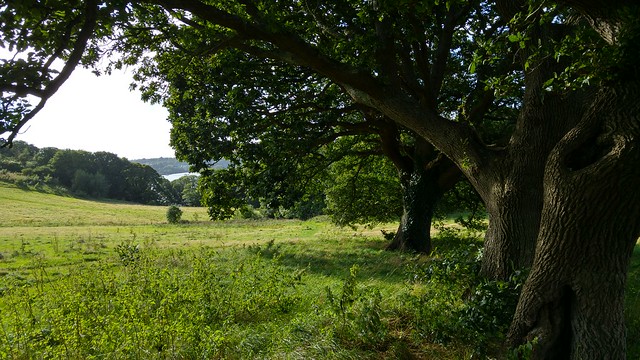
The photo is one I took of Ashley Jones Field in Bangor.

Cows, beef and shepherds

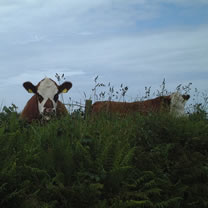
Cows among the heather in Cregneash, Isle of Man

Yesterday I learnt the Russian word for beef, говядина [ɡɐˈvʲædʲɪnə], and the promotely forgot it. So I thought I’d investigate its etymology to help me remember it.

говядина comes from говядо [ɡɐˈvʲadə] and old word for cattle. This comes from the Proto-Slavic *govędo (head of cattle, bull, ox), from the Proto-Indo-European *gʷew-n̥d-, from *gʷṓws (cattle) [source].

The usual Russian word for cow is корова [source], which comes from the Proto-Slavic *kőrva (cow), from the Proto-Indo-European *ḱerh₂- (horn) [source].

*gʷṓws is also the root of:

  • gak = boar (Albanian)
  • govs = cattle, cow (Latvian)
  • говядо = beef (Ukrainian)
  • говедо = cattle (Bulgarian, Macedonian & Serbian)
  • govedo = cattle (Croatian & Slovenian)
  • hovado = brute (Czech & Slovak)
  • gowjedo = cow (Lower Sorbian)
  • *kūz = cow (Proto-Germanic)
  • Kuh = cow (German)
  • koe = cow (Dutch)
  • ku = cow (Norwegian)
  • ko = cow (Swedish, Danish, North Frisian)
  • coo, kye = cow (Scots)
  • βοῦς = cow (Ancient Greek)
  • bōs = cow, bull, ox (Latin)
  • bou = ox (Catalan)
  • bue = ox, beef (Italian)
  • bife = steak (Portuguese)
  • bou= ox, idiot (Romanian)
  • buey= ox. steer (Spanish)
  • bœuf = cow, ox, beef, jam session (French)
  • *bāus = cow (Proto-Celtic)
  • *bōws = ox (Proto-Celtic)
  • bu, buw = cow, bullock, head of cattle (Middle Welsh)
  • buwch = cow (Welsh)
  • bugh = cow (Cornish)
  • bu, buoc’h = cow (Breton)
  • bó = cow (Irish)
  • booa = cow (Manx)
  • bò = cow (Scottish Gaelic)

The English words beef and bovine come ultimately from the same root. Beef comes from the Middle English beef, bef, beof, from the Anglo-Norman beof, from the Old French buef, boef (ox). from Latin bōs (“ox”)

The Proto-Indo-European word *gʷowkólos, from *gʷṓws (cow) & *kʷel- (to revolve, move around, sojourn) gives us the following words in the Celtic languages [Source].

  • *boukolyos = herdsman (Proto-Celtic)
  • *bʉgöl = herdsman (Proto-Brythonic
  • bugail = shepherd, pastor (Welsh)
  • bugel = child, shepherd (Cornish)
  • bugel = child (Breton)
  • búachaill = cowherd (Old Irish)
  • buachaill = boy, herdsman, servant, boyfriend (Irish)
  • bochilley = shepherd, herdsman (Manx)
  • buachaill, buachaille = cowherd, herdsman, shepherd, youth (Scottish Gaelic)

Snow falls

As there has been some snow here this week, and it’s snowing at bit as I write this, I thought I’d look at some words for snow.

Snow / Eira
A bit of snow in my garden yesterday morning

In Romanian snow is zăpadă [zəˈpadə], which comes from the Slavic word zapadati (to fall) [source]. To snow is a ninge, and snowfall is ninsoare, which both come from the Latin ningere (to snow), utimately from the Proto-Indo-European *sneygʷʰ- (to snow) [source].

The English word snow comes from Middle English snow/snaw, from the Old English snāw (snow), from the Proto-Germanic *snaiwaz (snow), from the Proto-Indo-European *snóygʷʰos (snow), from the root *sneygʷʰ- (to snow).

Many of the words for snow in other European languages come from the same Proto-Indo-European root. However, words for snow in Welsh (eira), Cornish (ergh) and Breton erc’h, come from the Proto-Celtic *argyos (white), via the Proto-Brythonic *ėrɣ (snow) [source].

Beards and chins

Illustration of a beard

One of the Romanian lessons I did today was about parts of the body. One word that came up was bărbie [bərˈbi.e], which I guessed meant beard, but actually means chin. I suppose beards usually grow on chins, so this isn’t too surprising.

Bărbie comes from the Vulgar Latin *barbilia, from the Latin barba (beard; wool; down on a plant). Or from the Romanian barbă (beard) +‎ -ie (a noun suffix) [source].

In Spanish chin is barbilla [barˈβiʎa] – barba (beard) with a diminutive suffix, so it could be translated as “little beard” [source].

The English word beard comes from the Middle English berd, bard, bærd, from the Old English beard, from Proto-Germanic *bardaz, from the Proto-Indo-European *bʰardʰeh₂, all of which mean beard. The PIE word *bʰardʰeh₂ is also the root of words for beard in Germanic, Slavic, Romance and Iranian languages [source], and in Welsh (barf) Cornish (barv) and Breton (barv) [source].

In the Gaelic / Goidelic languages however, the words for beard are different: féasóg in Irish, feusag in Scottish Gaelic, and faasaag in Manx. The come from the Old Irish fésóc, from fés (lip; body hair) [source].

Are words for beards and chins similar in other languages?

The Foreshortening Dark

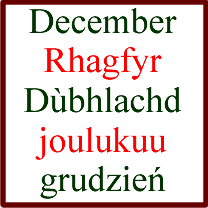
December in various languages

In many languages this month is known as December, or something similar, which comes ultimately from the Latin *decumo-mēnsris (of the tenth month) – the Roman calendar started in March (mārtius) [source].

However in some languages December has a completely different name:

In Welsh December is Rhagfyr [ˈr̥aɡvɨ̞r], which means the ‘foreshortening’, from rhagfyrhau (to foreshorten), from rhag (a prefix with various meanings) and byr (short, small) [source].

In Breton December is miz Kerzu [miz ˈkɛʁ.zy] – which means ‘very dark month’. The Cornish for December is similar and has the same meaning: Mys Kevardhu [source].

In Scottish Gaelic December is Dùbhlachd, From dubh (dark), so it’s a dark time [source].

In Irish December is Mí na Nollag (the month of Christmas). Nollag is the genetive of Nollaig, which comes from the Old Irish Notlaic (Christmas), from Latin nātālīcia (a birthday party), from nātālis (natal), from nātus (born) [source].

In Finnish December is joulukuu (Christmas/yule moon) [source], which was also the meaning of the Old English word for this month: Gēolmōnaþ.

In Czech December is prosinec [prɔsɪnɛt͡s], which comes from prosinoti (flashing, shining) [source].

In Polish December is grudzień [ˈɡru.d͡ʑɛɲ], from the Proto-Slavic *grudьnъ, from *gruda (heap, lump) & *-ьnъ [source].

Are there interesting names for December in other languages?

How many roads?

How many roads?

Last week I learned that there are quite a few words for roads in Irish. These include:

bóthar [ˈbˠoːhəɾˠ] = road; way, manner. From the Proto-Celtic *bow-itros (cow path).

Related words in other Celtic languages:

– bóthar [boː.ər] = alley, lane (Scottish Gaelic)
– bayr [bajr] = avenue, drive, lane, pad, roadway (Manx)
– beidr [beidɪr] = lane, track (Welsh)
– bownder [‘bɔʊndɛr] = lane (Cornish)

bóithrín = country lane, boreen (diminutive of bóthar)

bealach [ˈbʲalˠəx] = way, road track; pass. From the Old Irish belach (gap, pass, road, path).

Related words in other Celtic languages:

– bealach [bjal̪ˠəx] = pass; access; detour; breach, gap, opening; inlet (Scottish Gaelic)
– bollagh = channel, course, curving uphill road, gap, gorge, lane, passage, route, thoroughfare (Manx)

ród [rˠoːdˠ] = road, highway. From the Old Irish rót (road, highway).

Related words in other Celtic languages:

– rathad [ra.ad] = road, way, route (Scottish Gaelic)
– raad [reːd̪, raːd̪] = avenue, drive, lane, pad, roadway (Manx)
– rhawd [r̥aud] = course, career (Welsh)
– roud = route, trace (Breton)

slí [ʃliː] = way, road, track, route, passage. From the Old Irish slige (gap, pass, road, path).

Related words in other Celtic languages:

– slighe [ʃl̪ʲi.ə] = path, track, trail, way; course, passage, route (Scottish Gaelic)

cosán = path; footway, track; way, passage; direction. From the Old Irish casán (path, footpath), from cás (foot).

Related words in other Celtic languages:

– casan [kasan] = path; supporting beam; treadle; wattle (Scottish Gaelic)
– cassan [keːzən] = passage, path, pathway, sidewalk, thoroughfare; walk, footpath; trajectory (Manx)

cabhsa = causeway; path, lane

sráid [sˠɾˠɑːdʲ] = street; level (surfaced) ground around house; village. From the Old Irish sráit (street, road, path, way), from the Old Norse stræti (street), from Late Latin strāta (a paved road).

Related words in other Celtic languages:

– sràid [sdraːdʲ] = street (Scottish Gaelic)
– straid = street; farmyard; thoroughfare (Manx)
– stryd [striːd] = street (Welsh)
– stret [strɛ:t] = street (Cornish)
– straed = alley, lane (Breton)

Incidentally, the English word road comes from the Middle English rode/rade, from the Old English rād (riding, hostile incursion), from the Proto-Germanic *raidō (a ride), from the Proto-Indo-European *reydʰ- (to ride).

Sources: teanglann.ie, Wiktionary, Fockleyreen, Am Faclair Beag, Dictionnaire Favereau breton, cornish dictionary / gerlyver kernewek
Celtic conversations

This week I’ve had quite a few conversations in Manx. I only speak it when I come to the Isle of Man, and when I meet Manx learners at polyglot events. At the beginning of the week my Manx was decidedly rusty, but it’s starting to flow now. When I don’t know a word or phrase in Manx, I switch to Irish, and often get away with it. It helps that some of the Manx speakers I know here also speak Irish.

As well as Manx, and English, I spoke some Welsh last night, and odd bits of Scottish Gaelic, Cornish and Breton.

The performers here for the festival are from the Isle of Man, Scotland and Ireland. The songs have been in English and Manx, and the evening concerts have been introduced bilingually in Manx and English. There aren’t any performers here from Wales, Cornwall or Brittany this year, but there have been in previous years.

Tomorrow I’m off to Glencolmcille (Gleann Cholm Cille) in Donegal in the northwest of Ireland. I will speak plenty of Irish there, and probably other languages, and learn more traditional Irish songs and tunes.

Plains, pianos and floors

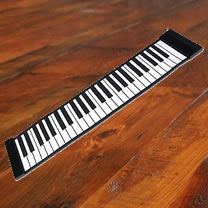
Flat piano on a wooden floor

The Welsh word llawr [ɬau̯r] means floor, deck, gallery, stage, platform, cellar, basement, ground, face, and a few other things. I discovered today that it has cognates in all the other Celtic languages:

leur (Cornish) = floor, ground
leur (Breton) = area, ground, floor, soil
lár (Irish) = ground, floor, middle, centre
làr (Scottish Gaelic) = floor, ground, storey
laare (Manx) = storey, deck, floor, bottom, flat, set, sill, level

These words all come from the Proto-Celtic *ɸlārom (floor), which comes from the Proto-Indo-European *pleh₂rom or *ploh₂rom, from *pleh₂- ‎(to be flat).

THe PIE word *pleh₂- is the root of many other words, including:

– The English piano, plain, plan, floor and flake
– The Dutch vloer (floor, ground, surface)
– The German Flur (hall, hallway, corridor, stairwell)
– The Italian piano (flat, level, smooth, plane, softly, quietly)
– The Spanish llano (even, flat, level, plain) and plano (plain, level, flat)
– The Latvian: plats, plašs ‎(wide, broad)
– The Lithuanian: platus ‎(wide, broas)
– The Russian плоский (flat, plain, level)

Sources: Wiktionary, Geiriadur Prifysgol Cymru, Maga Cornish Dictionary / Gerlyver Kernewek, Dictionnaires bilingues de Francis Favereau, teanglann.ie, Am Faclair Beag, On-Line Manx Dictionary, Reverso

Weathered pagodas and stretching times

Picture of a pagoda

The word for weather in Russian is погода (pogoda) [pɐˈɡodə], which sounds more or less like pagoda in English.

The English word pagoda, which refers to an Asian religious building, especially a multistory Buddhist tower, comes from Portuguese pagode, which comes via Tamil from the Sanskrit भगवती ‎(Bhagavatī, name of a goddess) or भागवत ‎(Bhāgavata, “follower of Bhagavatī”).

In French the words for weather, temps, also means time and tense, and comes from the Latin tempus (time, period, age, tense, weather), from the Proto-Indo-European *tempos ‎(stretch), from the root *temp- ‎(to stetch, string), which is also the root of the English word tempest, via the Latin tempestas ‎(storm), and the English word tense.

Breton also has one word for time and weather – amzer, which comes from the Proto-Celtic *amsterā ‎(time, moment), which is also the root of the Irish aimsir (weather, time and tense), the Manx emshir (weather, time and tense) and the Scottish Gaelic aimsir (climate, weather, season, era, time, reign), the Welsh amser (time, age, tense), and the Cornish amser (tense).

Sources: www.study-languages-online.com, Wiktionary

I’ve started putting together a new section on Omniglot featuring weather-related words and phrases. So far I have pages in Czech, Russian and Welsh.

In the UK we talk about the weather quite a bit. It’s (usually) a neutral and uncontroversial topic, and while some people are genuinely fascinated by it, for most of us it’s just a way to start a conversation. Do people do this is other countries? Or do you use of topics as conversation starters?

Language plans

While I don’t usually make New Year’s resolutions, I do make language plans. This year I’m continuing to learn Russian and Cornish, and would like to learn a bit of Slovak before the Polyglot Gathering in Bratislava in May/June, and some Icelandic before the Polyglot Conference in Reykjavik in October.

I’m using Duolingo to learn Russian, and SaySomethingInCornish for Cornish. I haven’t tried Duolingo before, and am finding it quite good so far, and like the way it’s structured.

I’ve dabbled briefly with Icelandic and Slovak before, so they’re not completely new languages to me. If I get round to learning a new language this year, it will probably be Romanian.

Do you have language plans for this year?