In this post we’re looking at words for we, us, our and related pronouns in Celtic languages.
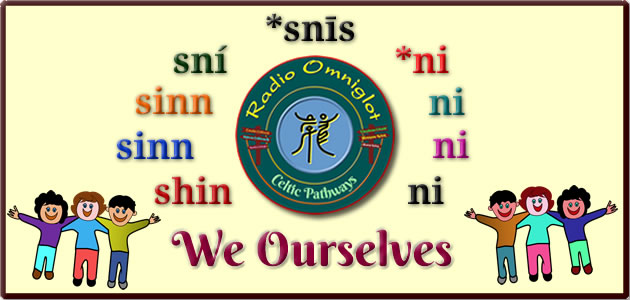
Words marked with a * are reconstructions.
| Proto-Celtic | *snīs = we *snīsnīs = we, ourselves (?) *snos = us *anserom = our |
|---|---|
| Gaulish | sni = we |
| Old Irish (Goídelc) | sní [ˈsʲn̠ʲiː] = we snisni, nini, sinni = we (emphatic) ar = our |
| Middle Irish (Gaoidhealg) | sní [ˈsʲn̠ʲiː] = we snisni, snissni, snissi, sisni, sinni, nini, ninni = we (emphatic) ar, ‘r = our |
| Irish (Gaeilge) | sinn [ʃinʲ] = we, us sinne[ˈʃin̠ʲə] = we, us (emphatic) sinn féin = ourself muid [mˠidʲ] = we (Connacht, Ulster) muidne[ˈmˠin̠ʲə] = we, us (emphatic) ár [ɑːɾˠ / əɾˠ / ɛɾʲ] = our |
| Scottish Gaelic (Gàidhlig) | sinn [ʃiNʲ] = we, us sinne [ʃiNʲə] = we, us (emphatic) sinn fhìn = ourselves ar [ər] = our |
| Manx (Gaelg) | shin [ʃin] = we, us shinyn = we, us, ourselves (emphatic) shin hene = we ourselves, ourselves ain, ar, nar, nyn = our |
| Proto-Brythonic | *ni = we *nini = we (emphatic) |
| Old Welsh (Kembraec) | ni = we, us an = our |
| Middle Welsh (Kymraec) | ny, ni = we, us nini, nyni = we, us, ourselves (emphatic) nynheu, ninheu, nynhev, nynne, ninneu = we (us) too, we (us) also, even we (us) nyhunein, nu hun, nyhun(an) = ourselves yn, in, an = our |
| Welsh (Cymraeg) | ni [niː] = we, us ninnau = we (us) too, we (us) also, even we (us) nyni = we (us) (emphatic), we (us) ourselves nyninnau = we / us also, even we / us, we / us ourselves ein hun(ain) = we, us ourselves, our own ein (… ni) [ei̯n niː] = our, us |
| Middle Cornish (Cernewec / Kernuak) | ni, ny = we, us agan, an = our agan honan = ourselves |
| Cornish (Kernewek) | ni, nei = we nyni = we (emphatic) agan, ‘gan, ‘n = our agan re = ours agan honan, agan honen = ourselves |
| Old Breton (Brethonoc) | ni = we |
| Middle Breton (Brezonec) | ny = we hon, hor = our |
| Breton (Brezhoneg) | ni [ni] = we hol, hon, hor = our ni hon hunan = ourselves |
Etymology: from PIE *nēs (we), a modification of *nos, the oblique plural form of éǵh₂ (I) [source] and *téwe (your) [source].

Sources: Wiktionary, Am Faclair Beag, Online Manx Dictionary, Teanglann.ie, eDIL – Electronic Dictionary of the Irish Language, In Dúil Bélrai English – Old Irish glossary, Geiriadur Prifysgol Cymru, Gerlyver Kernewek, Dictionaire Favereau, TermOfis, English – ProtoCeltic WordList (PDF), Etymological Dictionary Of Proto Celtic