Podcast: Play in new window | Download
In this Adventure in Etymology we investigate the tardy roots of the word delay.
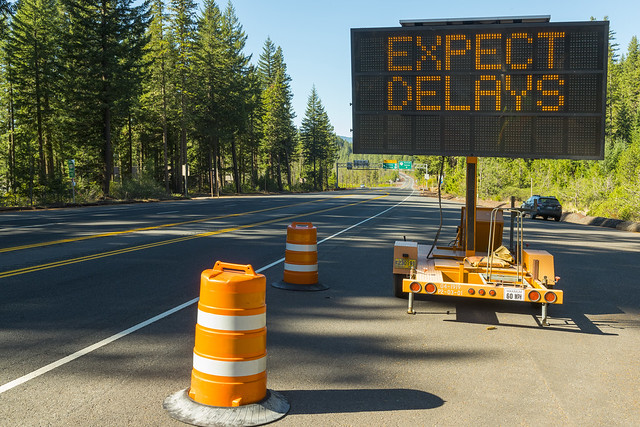
A delay [dɪˈleɪ̯ / dəˈleɪ̯] is a period of time before an event occurs; the act of delaying; procrastination; lingering inactivity, and various other things.
To delay can mean to put off until later; to defer; to retard; to temporarily stop; to wait; to hesitate, and other things.
It comes from Middle English delaien (to delay, postpone, withhold, hinder), from Old French deslai(i)er (to delay), probably a conflation of the Old Frankish words *lattjan (to delay, hinder) and *laibijan (to leave).
The former comes from Proto-Germanic *latjaną (to delay, hinder, stall), from PIE *leh₁d- (to leave, to be tired), and the latter comes from Proto-Germanic *laibijaną (to leave), from PIE *leyp- (to stick, fat) [source].
Words from the same Old French roots include délai (time limit, extension) in French, tlajja (to loiter, linger, stroll back forth) in Maltese, and dally (to waste time in trivial activities, or in idleness) and dalliance (playful flirtation, a wasting of time in idleness or triffles) in English [source].
Other words from the PIE root *leh₁d- (to leave, etc) include laten (to leave, let, cause to) in Dutch, lassen (to allow, permit, let) in German, laisser (to leave, forget, let) in French, and late, let, lease and lassitude in English [source].
Other words from the PIE root *leyp- (to stick, etc) include leve (to live, to be alive) in Danish, lepiť (to stick) in Slovak and leave, belive, life and liver in English [source].
If you would like to support this podcast, you can make a donation via PayPal or Patreon, or contribute to Omniglot in other ways.
Radio Omniglot podcasts are brought to you in association with Blubrry Podcast Hosting, a great place to host your podcasts. Get your first month free with the promo code omniglot.

I also write about words, etymology and other language-related topics on the Omniglot Blog, and I explore etymological connections between Celtic languages on the Celtiadur blog.