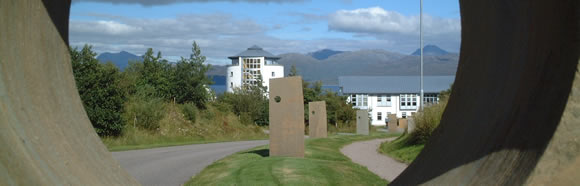
Panceltic concert

Last night I went to a great concert in St John’s (Balley Keeill Eoin) at which all the modern Celtic languages were sung and/or spoken, as well as English and French. It was wonderful to hear them all, and I even understood odd bits of the Cornish and Breton, the only Celtic languages I haven’t got round to studying yet.

I think it was the first time I’ve heard Breton spoken and sung live – I have heard recordings before though. I thought that it sounds kind of similar to French, but when you listen closely you realise that it isn’t French at all.

I spoke to various people in Manx, English, Welsh, French and a bit of Irish, and joined in with songs in Manx and Scottish Gaelic at the session in Peel (Purt ny hInshey) after the concert.

An Irish group called Guidewires will be playing in Peel tonight, supported by a Manx group called Scammylt, and before that there’s a talk on Welsh poetry by Mererid Hopwood.

Tomorrow I’m off to Gleann Cholm Cille in Donegal for a week of Irish language and music at Oideas Gael’s Irish Language and Culture Summer School.

Come-all-ye

Last night I went to a fascinating talk by Cass Meurig about the history of the crwth (a type of medieval bowed lyre) and its place in Welsh music and tradition, which included songs in Welsh.

After the talk there was a very enjoyable ‘Come-all-ye’ singing session lead by Clare Kilgallon and members of Cliogaree Twoaie (‘Northern Croakers’), a Ramsey-based choir who sing in Manx and English. There were songs in Manx, English, Welsh and Cornish, and I did a Scots lullaby (Hush, Hush, Time to be sleeping).

I think the phrase ‘come-all-ye’ refers to the type of songs known as “Come all ye’s”, which tend to begin with “Come all ye (sons of liberty/ good people/ tramps and hawkers etc) and listen to my song”. That’s according to Dick Gougan anyway. We didn’t actually sing any such songs last night though.

Yn Chruinnaght

At the moment I’m in the Isle of Man for Yn Chruinnaght (‘the gathering’), the Manx National and Inter-Celtic Festival. Yesterday I heard some Scottish Gaelic and odd bits of Manx at a fantastic concert featuring Capercaille and a bunch of local musicians (David Kilgallon and Some Thoroughly Nice Folk), and expect to hear all the other Celtic languages while I’m here as performers and visitors from all the Celtic lands are here for the festival.

The word cruinnaght means ‘assembly, function, gathering, event’ and is used in such expressions as:

– cruinnaght skeerey – parish gathering
– Cruinnaght Vanninagh Ashoonagh – Manx National Assembly
– cruinnaght-vooar – mass meeting

In case you’re wondering, cruinnaght acquires an extra h after yn (the) because it’s feminine and the initial letters of feminine nouns usually mutate after the definite article, in the singular at least. This is a peculiarity shared by all the Celtic languages.

The verb form of cruinnaght is cruinnaghey, which means ‘to gather, huddle, troop, enclose, beseige, raise, round, head, screw up, sum up, focus’.

Source: Online Manx Dictionary

Pride

I’m often asked to translate words and phrases into various languages. Without any context this is particular challenging as a word in English might have more than one possible translations in another language.

The other day, for example, I was asked to translate “Scottish Pride” into Scots and Scottish Gaelic. The Scots version is easy, “Scots Pride”, and the Scottish part is easy in Scottish Gaelic, “na h-Alba”, but there are quite a few equivalents of pride, each of which has slightly or very different meanings. Dwelly gives the following translations of pride:

– ain-mèin – pride, haughtiness, arrogance, frowardness.
– ànart – pride, disdain, contempt.
– àrdan – pride, haughtiness; anger, wrath; height, eminence, hillock
– barracaid – pride; loud talk.
– boiteal – pride, haughtiness, arrogance.
– borraileachd – pride.
– bròd – pride, arrogance, haughtiness; chastisement;
– cuidealachd – pride.
– diomas – pride, arrogance; defiance.
– làstan – pride, sauciness, lordliness boasting for nothing.
– mórchuis – pride, pomp, magnificence, splendour; boasting, vainglory, ambition, state, pride, glory; exploit
– pròis – pride, haughtiness; flattery; humouring, cajoling; ceremony; neat, punctilious little female, prude; conceit; niceness
– pròisealachd – pride, haughtiness; punctiliousness, niceness, ceremoniousness; humouring nattering; punctilious prudery or neatness.
– spailp – pride, spirit, courage, boldness; conceit, self-conceit; foppish young man, beau; airs of importance; armour, belt; kiss; lie; attitude of the foot stretched out, as of a self-important fellow
– starn – pride, haughtiness, conceit.
– stàt – pride, haughtiness.
– stràic – pride, self-conceit; swell of anger or passion
– uabhar – pride, insolence, bluster, vainglory; pomp; heat; extreme pride
– baiseal – pride, arrogance, haughtiness.
– barracaideachd – pride, sauciness.
– cuidealas – pride, conceit, forwardness.
– leòime – pride, self-conceit; foppishness, prudery, coquetry.
– leòm – pride, conceit, gaudiness, foppishness, vainglory, prudery; drawling pronunciation; flattery
– rimhiadh – pride.
– uaibhreachas – pride, pomp, vainglory, haughtiness, arrogance; insolence; great haughtiness, extreme degree of pride or vainglory

Without any context, I would guess that “Mórchuis na h-Alba” might be a good translation of “Scottish Pride”.

In English pride can have a number of meanings as well. According to the OED it can mean:

– A high, esp. an excessively high, opinion of one’s own worth or importance which gives rise to a feeling or attitude of superiority over others; inordinate self-esteem.
– Personified, esp. as the first of the seven deadly sins.
– Arrogant, haughty, or overbearing behaviour, demeanour, or treatment of others, esp. as exhibiting an inordinately high opinion of oneself.
– A consciousness of what befits, is due to, or is worthy of oneself or one’s position; self-respect; self-esteem, esp. of a legitimate or healthy kind or degree.
– The feeling of satisfaction, pleasure, or elation derived from some action, ability, possession, etc., which one believes does one credit.
– Magnificence, splendour; pomp, ostentation, display
– A group of lions forming a social unit.
– The best, highest, or most flourishing state or condition; the prime; the flower.

Pride is derived from proud, from the Old French prod/pro/prot/proz (courageous, valiant, good, noble), from the post-classical Latin prode (profitable, advantageous, useful), from the classical Latin prōdesse (to be of value, be good).

The worm that turned

cartoon worm

While working in my garden this afternoon I dug up lots of worms, so I thought it might be interesting to find out more about the word worm.

Meanings of worm (/wɜːm/ /wɝm/) include:

– a member of the genus Lumbricus; a slender, creeping, naked, limbless animal, usually brown or reddish, with a soft body divided into a series of segments; an earthworm. More widely, any annelid, terrestrial, aquatic, or marine;
– any animal that creeps or crawls; a reptile; an insect;
– serpent, snake, dragon;
– four-footed animals considered noxious or objectionable.

Some of these meanings are archaic or obsolete.

There have been many variant spellings, including wirm, wrim, wyrme, weorm, werm, werme, wurm, wurem, orm, wrm, wourme, woirme, woorme, worme, and it finally settled on worm.

Worm comes from the Old English wyrm (a serpent, snake, dragon), from the Proto-Germanic *wurmiz (serpent, worm), from the Proto-Indo-European *wrmi-/*wrmo- (worm), possibly from *wer- (to turn). *wrmi-/*wrmo- is also the root of the Irish and Scottish Gaelic word gorm (blue/black), the Welsh gwrm (dusky), the Danish/Norwegian/Swedish orm (snake), the Latin vermis, which is the root of the English words vermilion and vermin, and quite a few other words in various languages.

Some interesting worm factoids

– there are some 2,700 different types of worms
– an acre of land can contain over a million worms
– Cleopatra VII made the export of worms from Egypt a capital crime as she realized the important roll they play in keeping soil fertile
– Charles Darwin studied worms for many years and concluded that they are one of the most important creatures on earth.

Sources: Oxford English Dictionary, Online Etymology Dictionary, Wikipedia, Word-Origins.com, Eartworm Farming, Worm Facts

Levees and ganseys

Last night the words levee and gansey came up in conversation and while I’d heard both of them before, I wasn’t entirely sure of the meaning of the former, or the origins of the latter. I did know that a levee had something to with flood prevention and was something you drive your chevy to, and that gansey sounded similar to the Irish word, geansaí (jersey, jumper), though I hadn’t heard it used in English before.

A levee, /lɪˈviː/ or /ˈlɛviː/, is a natural embankment along a river formed by sedimentation, or a man-made embankment along a river or around a field designed to prevent flooding. It is also a landing place or quay; a formal ceremony held when a sovereign gets up in the morning, or an afternoon reception for men at court [source].

Levee in the sense of a man-made flood-prevention embankment is apparently used mainly in American English (especially in the Midwest and Deep South), and was first used in English in New Orleans in around 1720. Other words for levee include levée, dike/dyke, embankment, floodbank and stopbank.

Etymology: the feminine form of the past participle of the French verb lever (to raise), from the Latin levare (to raise), from levis (light in weight), from the Proto-Indo-European root *le(n)gwh- (light, easy, agile, nimble) [source].

According to the Oxford English Dictionary, gansey, /ˈgænzɪ/, is a jersey or pullover and is a dialect variant of Guernsey, one of the Channel Islands famous for its knitted sweaters. It is also written gansy, ganzee, ganzey, ganzie & ganzy. This dictionary also has a Guernsey coat, “a thick, knitted, closely-fitting vest or shirt, generally made of blue wool, worn by seamen”, which is also known as a Garnesie, Garnsey or Gernsey.

Another source claims that the word gansey comes from “a word of Scandinavian origin meaning ‘tunic'”. This sounds plausible as the Norwegian word for such a garment is genser [source], though it’s possible that the Norwegian word comes from Britain or Ireland.

The Art of the Fishing Communities website, “Ganseys (Guernseys), Jerseys, Aran and Fair Isle are names given to fishermen’s knitted pullovers that were universally popular in the 19th and early 20th century. Each fishing village had its own pattern and within the local pattern there were small variations, and sometimes names, that identified the family and individual.”

The Irish word for jersey or sweater, and also the island of Guernsey, is geansaí /gʲansiː/, sounds similar to gansey and possibly comes from the same source. The word is also found in Manx – gansee and in Scottish Gaelic – geansaidh.

What do you call a knitted woollen top?

Jumper, sweater, pullover and jersey, and indeed gansey, are all used in the UK, and I normally say jumper.

Christmas

Nadolig Llawen
Joyeux Noël
聖誕快樂
Nollaig shona doibh
¡Feliz Navidad!
Nollick Ghennal
Bo Nadal
Nollaig chridheil
メリークリスマス
Buon Natale
Frohe Weihnachten
Bon Nadal
Veselé vánoce
and Merry Christmas!

Colds, streams and rivers

A snow-covered Siliwen Road in Bangor

It’s rather cold here at the moment with daytime temperatures not much above freezing, and nighttime dropping to -10°C (14°F) or even -20°C (-4°F) in places. As a result, some of the snow that fell last week has frozen solid and been trampled down on pavements and ungritted back streets making them decidedly icey and slippery.

I also have a cold at the moment, so I thought I’d look into how to say “I have a cold” in a number of languages. In French it’s “Je suis enrhumé” or “I am enrhumed”. Enrhumé comes from rhume (cold), which comes from the Old French reume, from the Latin rheuma, from the Greek rheuma (stream, current, a flowing), from rhein (to flow), from the Proto-Indo-European *sreu- (to flow). The Proto-Indo-European *sreu- is also the root of the Irish sruth (stream, river), the Welsh ffrwd (stream) and the Polish strumyk (brook). [source].

The Czech word for cold rýmu appears to be spring from the same source – mám rýmu is “I have a cold” by the way – as does the English word rheumatism. You can also say jsem nachlazený for “I have a cold” in Czech, which has a similar structure to the French phrase – “I am colded” or something like that.

In Welsh you don’t have a cold but rather a cold is on you: mae annwyd arna i, and the other Celtic languages use the same structure, “Is cold on/at me”: tá slaghdán orm (Irish), tha ‘n cnatan orm (Scottish Gaelic), ta feayraght/mughane aym (Manx).

In German “I have a cold” is Ich bin erkältet (“I am becolded?”), with erkältet coming from kalt (cold).

In Mandarin Chinese you say 我感冒了 (wǒ gǎnmào le) or “I catch cold [change of state particle]”.

Twndis

Twndis [‘tʊmdɪs] (nm, pl: twndisau) = funnel – also twnffat [‘tʊmfat]

I discovered the Welsh words twndis and twnffat last night. I’m not sure why the subject of funnels came up in conversation, but these words particularly appealed to me, especially the latter.

This morning I found out that the word tundish is used for funnel in Joyce’s Portrait of the Artist as a Young Man, and that it originally meant “a funnel made to fit into the bung of a tun”. A tun is a large cask, but I’m sure you knew that [source]. These days a tundish is sort of funnel used in metal casting, and also in plumbing [source].

Tundish appears to be related to the Welsh word twndis, and the word tun is possibly of Celtic origin: – from the Middle Irish tunna, and the Old Irish toun (hide, skin).

Words for funnel in the Modern Celtic languages come from the same root: as well as twndis in Welsh, there’s tunnadair (funnel, filler, tunning-dish, tunner) in Scottish Gaelic, tonnadóir in Irish, tunneyder in Manx and tum in Breton.

I’m not sure of the etymology of twmffat, but ffat on it’s own means slap or pat, and ffatio means to slap.