This week I finally finished the Russian course I’ve been working through on Memrise, and am giving Russian a break for now. I may go back to it at some point, and try to get a better grip on the grammar, which I still find hard, even after three years of studying a little every day.
I promised myself that I’d start learning a different language once I’d finished the Russian lessons, and have decided to learn some more Dutch. I know a little already, and can understand it to some extent thanks to my knowledge of English, German and related languages. So it’s easier for me than Russian. I’m just learning it on Duolingo at the moment, and may try other apps as well.
I like the weird and wonderful phrases that come up on Duolingo, and expect there’ll be plenty in Dutch. A couple of very useful phrases that came up today were:
An interesting idiom that came up in my Russian lessons this week is будет и на моей улице праздник (budet i na moey ulitse prazdnik), which is translated as “it’s always darkest just before the dawn”, and means literally “There will be a festival / celebration even on my street”.
The origins of this idiom are apparently related to the fact that many streets in Russia used to have their own churches, and they would hold celebrations in the street for the local saint. So no matter how bad things might get or seem, you could look forward to such fesitivities [source].
Some examples of how this Russian idiom is used:
Ну ничего, будет и на моей улице праздник Well I would see the feast at an end
Будет и на моей улице праздник I’ll have my day in the sun
Будет и на моей улице праздник The question is, will you?
Ничего, будет и на моей улице праздник! One of these days
The English version means “there is hope, even in the worst of circumstances”, and first appeared in writing in 1650 as “It is always darkest just before the Day dawneth”, in A Pisgah-Sight Of Palestine And The Confines Thereof, a book by the English theologian and historian Thomas Fuller. It is not known if Fuller coined it, or if he was recording a piece of folk wisdom.
In 1859 Samuel Lover wrote in his book Songs and Ballads that this idiom was popular among the Irish peasantry, who said “Remember that the darkest hour of all. is the hour before day” [source]
Are there equivalents of this idiom in other languages?
A new song came to me the other day. I’d been thinking of writing something in a made up language, and spent some of last week speaking to myself in made up words. The words were all open syllables (consonant plus vowel) and most were two syllables.
I wrote the song down and sent it to my singer-songwriter friends. One of them put it into Google Translate, which identified the language as Chichewa, a Bantu language spoken mainly in Malawi.
These are the original words with their Chichewa meanings (according to Google Translate):
Oba mmta uku kitu (Bow and find something)
Tika kuta dupa fu (Tika walls dupa fu)
Fitu mmdu bapi kati (What is the difference between)
Taku mipa untu li (Taku barrels)
Oba mmba undu fitu (Be very serious)
Tepu pimi mmdu ku (Tape pima mmdu to)
Kata tifu uko kibi (Cut off live)
Bifu bafu taku ni (The bath tub taku is)
Kula tupa muta pitu (Eating discarded)
Katu tiku lafu lu (We are already dead)
Lipa lupa pula puli (Pay the pula plum)
Talo tilu lopa mi (So this is the story of my life)
I then played around with the words until they all meant something in Chichewa, and came up with the following:
Oba mpa katu kitu (Pray for nothing)
Tuka kuta taku du (Exit the walls)
Fitu mbu bapi kati (Where’s the mosquito repellent)
Tala mipa untu li (Color your bodies)
Oba mba undu fitu (Pray now and then)
Tafu pima ndu ku (Find out how to)
Kata tifu uko kibi (Cut off live)
Bifu bafu tata ni (The master bath complex is)
Kula tupa muta pitu (Eating discarded)
Katu tiku lafu lu (We are already dead)
Lapa lupa pula puli (The family is raining)
Talo tilu lopa mi (So this is the story of my life)
So I accidentally managed to write a song in a language I don’t know at all. It may be mostly nonsense, but it’s sort of meaningful nonsense.
Do any of you speak Chichewa? If so, is this a good translation?
Have you ever written some nonsense like this, and found that it meant something in a language you don’t know?
This sounds like something from the brilliant YouTube channel Translator Fails, on which songs, and sometimes other things, are put through Google Translate too many times and become thoroughly mangled. Here’s a recent example:
A while ago I was approached by the Chartered Institute of Linguists (CIOL) asking if I’d like to by interviewed for their journal, The Linguist. They were looking for linguists and others involved with languages who have set up language-related businesses.
This sounded like a good thing to do, and I was interviewed over the phone. Some months latter I was sent a copy of their magazine with the interview in it. I didn’t mention at the time as I was waiting for it to be available online. It is now available in the Februrary/March edition (page 7).
I talk about Omniglot – what it is, how it came to be, how I make a living from it, and my own language background.
I’ve been wondering whether to join the CIOL – I would qualify for membership, I think. Are any of you members or this, or other professional organisations for linguists? Is it worth joining?
In other news, this week I was interviewed, in French, for a podcast by Céline Guerreiro. I’ll let you know when that is online. We talked about language learning, mainly.
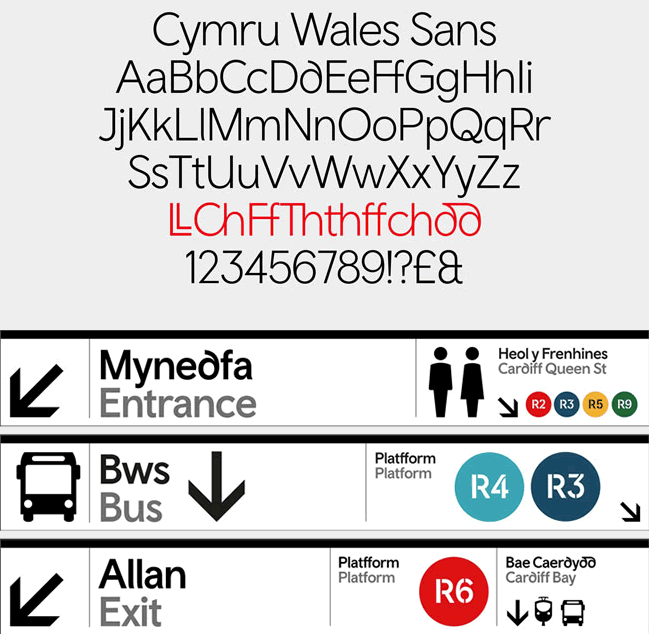
According to an interesting article I read today on Facebook, a new typeface has been developed recently for Welsh.
The typeface was commissioned by the Welsh government, and is called Cymru Wales. It includes digraphs for double letters like dd, ll and rh, and is used by Transport for Wales / Trafnidiaeth Cymru, who run the trains in Wales.
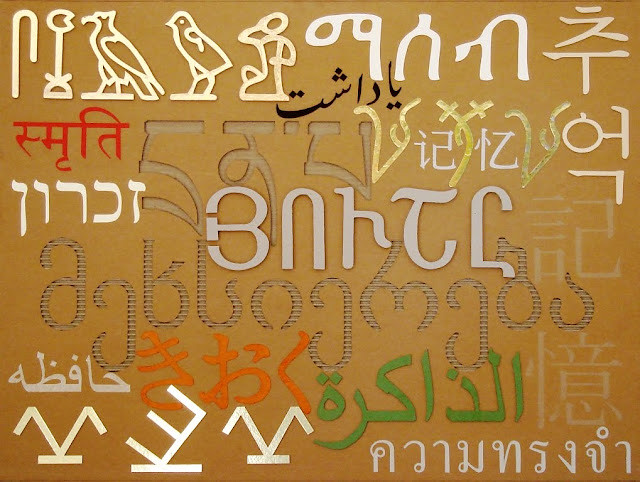
In Russian the word for memory is память [ˈpamʲɪtʲ], which comes from the Proto-Slavic *pamętь (memory), from the prefix *pōˀ and *mintis (though, mind), from the Proto-Indo-European *méntis (thought) [source].
Related words include:
памятник [ˈpamʲɪtʲnʲɪk] = memorial, monument
памятный [ˈpamʲɪtnɨj] = commemorative, memorable, memorial
памятливый [ˈpamʲɪtlʲɪvɨj] = having a retentive memory, retentive
памятка [ˈpamʲɪtkə] = memo, memorandum
запамятовать [zɐˈpamʲɪtəvətʲ] = to forget (dated / colloquial)
злопамятный [zlɐˈpamʲɪtnɨj] = vindictive, rancorous, unforgiving, likely to hold a grudge
помнить [ˈpomnʲɪtʲ] = to remember
*méntis is also the root of such English words as dementia, mendacious, mental, mind, monitor and premonition.
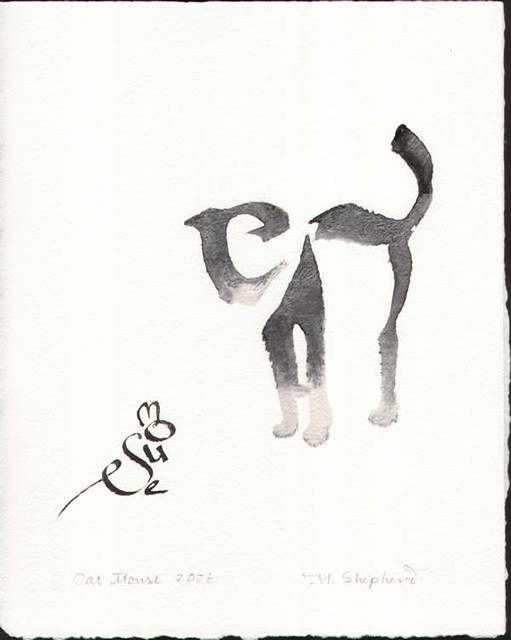
In Russian, a painting or picture is a живопись [ʐɨvəpʲɪsʲ]. This comes from живой [ʐɨˈvoj] (alive, living, live, lively) and писать [pʲɪˈsatʲ] (to write). So you could say that a Russian painter is “writing life” and that their paintings are “life writing” [source].
An English word with a similar literal meaning, but a different actual meaning, is biography.
Another Russian word for picture, and also image or scene, is a картина [kɐrˈtʲinə], which comes from the Italian cartina (fine paper, map), from carta (paper, map, menu, card), from the Latin charta (papyrus, paper, poem), from the Ancient Greek χάρτης (khártēs – papyrus, paper), from χαράσσω (kharássō – I scratch, inscribe), from the Proto-Indo-European *ǵʰer- (to scratch) [source].
If languages were logical and consistant, you might expect that Russian words for art, artist, painter, picture and to paint might be related to живопись. Most of them aren’t:
Art is искусство [ɪˈskustvə], which also means skill, craftsmanship, craft. It comes from the Old Church Slavonic искусьство (iskusĭstvo), from искоусъ (iskusŭ – test, experiment), probably from the Proto-Germanic *kustiz (choice, trail), from the Proto-Indo-European *ǵews- (to taste, try), which is also the root of the English words choice, cost and gusto [source].
An artist or painter is a художник [xʊˈdoʐnʲɪk]. It comes from the Old East Slavic художьникъ (xudožĭnikŭ – artist, painter, master), from худогъ (xudogŭ – skillful, experienced, lucky), from the Proto-Slavic *xǫdogъ, from the Proto-Germanic *handugaz (handy, skilful, dextrous), which is also the root of the English word handy [source].
There are several Russian words for to paint:
рисовать [rʲɪsɐˈvatʲ] means to draw, paint, depict, and comes from the Polish rysować (to draw, sketch), from the Middle High German rīzen, from the Old High German rīzan (to scratch) [source].
красить [ˈkrasʲɪtʲ] means to paint, dye or adorn. It is related to the word краска (paint, dye, ink, colours), which comes from the Old Church Slavoic краса (krasa – decoration) [source].
писать [pʲɪˈsatʲ] means to write or paint (a painting). It comes from the Old East Slavic писати (pisati – to write, paint), from the Proto-Slavic *pisati (to draw depict, write), from the Proto-Indo-European *peyḱ- (to hew, cut out; stitch, embroider, sting; paint, mark, colour), which is also the root of the English words paint and picture [source].
Have you ever wonder why we talk about ‘blazing trails’?
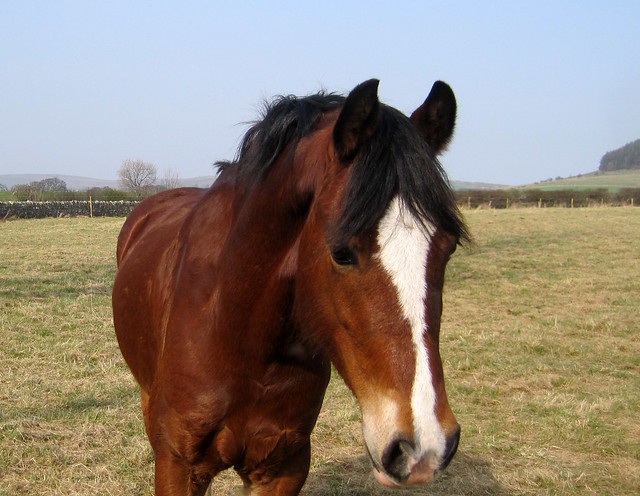
Well, according to Dent’s Modern Tribes – The Secret Languages of Britain by Susie Dent, one of the books I got for my birthday last week, one of the original meanings of the word blaze was a white spot on a horse’s or cow’s forehead. It came to mean any light coloured mark or spot.
In the 18th century in North America, trails, paths and boundaries could be indicated by stripping a piece of bark off a tree and making a white mark on it. Thus to blaze a trail meant to mark trees along the trail in this way.
The word blaze, in this context, is thought to have come via northern English dialects, from the Old Norse blesi (white spot on a horse’s face), from the Proto-Germanic *blas- (shining, white), from the Proto-Indo-European *bʰel- (to shine, flash, burn) [source], which is also the root of the English word flame, and related words in other languages.
If I hadn’t known this, I would have guessed that blazing a trail originally involved literally blazing a trail with fire.
When faced with long words in languages like Russian, one thing that helps me remember them is to break them down into their constistuent parts and find out what each part means.
For example, a Russian word that came up in my lessons recently was поддерживать (podderživát’) [pɐˈdʲːerʐɨvətʲ], which means to support, keep up or maintain [source].
It comes from поддержать (podderžát’) – to support, help up, & -ивать (-ivat’) – a verb suffix.
поддержать comes from под- (pod-) – under, by, near, & держать (deržát’) – to keep, to hold. So you could see that you’re ‘underholding’ something or someone when you support them in Russian [source].
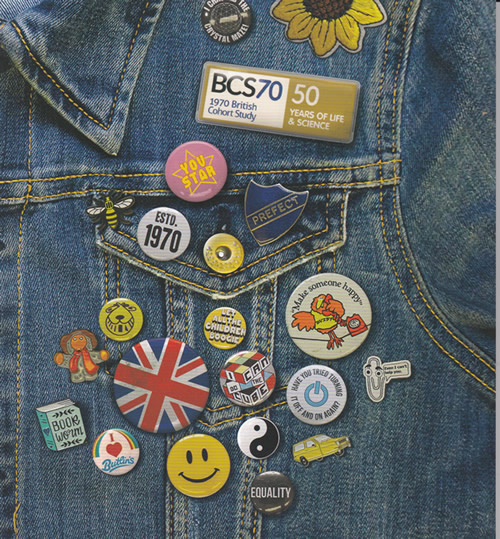
50 years ago this week a longitudinal cohort study known as the 1970 British Cohort Study or BCS70 started. The aim was to follow the lives of as many as possible of the 17,287 people born in England, Wales and Scotland during that week (5-11 April). Similar studies were started before then, and have been started since.
BCS70 has collected information on health, physical, educational and social development, and economic circumstances, and so on. It has become a vital source of evidence on key policy areas such as social mobility, education, training and employment, and economic insecurity [source].
Well, I am one of those 17,287 people, and today is my 50th birthday.
Previously I knew only one other person who shared a birthday with me, and one with a birthday the day before. Recently the people at BCS70 set up a Facebook group for participants in the survery, and I found there are quite a few people with the same birthday as me.
It’s interesting to get to know them, and to share memories and stories. For example, it snowed on the day I was born, and quite a few other people in the group have said that there was snow on their birthdays as well. Today, by contrast, it started as a warm, sunny day, and is starting to cloud over as I write this.
Another interesting thing I’ve noticed in the group is that people are using their day of birth to refer to themselves. Today, for example, we 9ers are all wishing each other a happy birthday, yesterday it was the 8ers, and tomorrow will be the 10ers.
On this day in 1970 Paul McCartney apparently accounced the official break-up of the Beatles [source]. Other sources say it happened on 10th April. I had nothing to do with it.
The word cohort in this context means “A demographic grouping of people, especially those in a defined age group, or having a common characteristic” [source].
It comes from the Old French cohorte (cohort, a division of the Roman legion), from the Latin cohors (court; farmyard or enclosure; retinue; circle, crowd; tenth part of a legion; ship’s crew; bodyguard; military unit of 500 men), from co- (with) and hortus (garden) [source]
The word longitudinal in this context means “sampling data over time rather than merely once” [source]
It comes from the Latin longitūdō (length, longitude), from longus (far, long) and -tūdō (-ness: suffix for forming nouns) [source]