Podcast: Play in new window | Download
In this Adventure in Etymology we point out the origins of the word index.
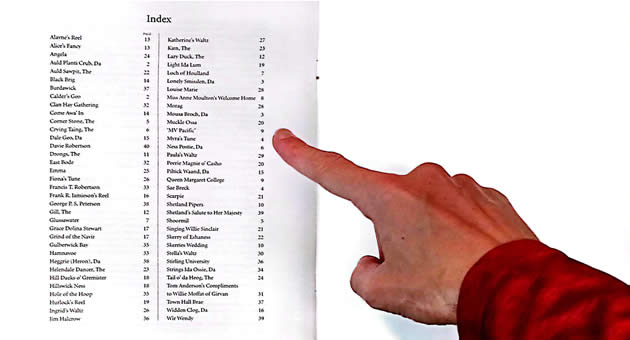
An index [ˈɪndɛks] is an alphabetical listing of items and their location; the index finger; a movable finger on a gauge, scale, etc (other meanings are available).
As a verb to index can mean to arrange an index for something; to inventory; to measure by an associated value, and other things.
It comes from Latin index (a pointer, index finger, index, list, sign, informer, spy), from in (in, at, on) and dicō (to say, talk, speak, declare, tell) [source].
Dicō comes from Proto-Italic *deikō (to show, indicate, say, tell), from Proto-Indo-European *déyḱeti (to be pointing out), from *deyḱ-. (to point out, to show) [source].
English words from the same roots include dictate, diction, dictionary, digit, edict, indicate, judge, preach, predict, teach, toe, token, verdict and vindicate [source].
Words in other languages from the same roots include decir (to say, tell) in Spanish, vingar (to avenge, revenge, thrive) in Portuguese, দিক (dik – direction, side, end) in Bengali, Zeh (toe) in German, teikn (omen, sign, icon) in Icelandic, and mallacht (curse) in Irish [source].
Incidentally, if there is more than one index, do you talk about indexes or indices?
I prefer indexes, but think you could use indexen (similar to ox / oxen, child / children, and aurochs / aurochsen) instead. The -en plural ending used to be a more common and used for words such as cheesen (cheeses), kneen (knees), eyen (eyes), foxen (foxes) and shoon (shoes) [source].
If you would like to support this podcast, you can make a donation via PayPal or Patreon, or contribute to Omniglot in other ways.
Radio Omniglot podcasts are brought to you in association with Blubrry Podcast Hosting, a great place to host your podcasts. Get your first month free with the promo code omniglot.

I also write about words, etymology and other language-related topics on the Omniglot Blog, and I explore etymological connections between Celtic languages on the Celtiadur blog.