Grubstake

I came across the word grubstake in a book I’m reading at the moment and it caught my attention because I haven’t seen it before. It appears in the following context:

“From the moment I first arrived back in New York, my father has wanted me to leave the city. He would be happy to grubstake my move to greener pastures.”

From this I can guess that grubstaking probably involves providing financial support, though without the context one might guess that it might be a kind of food.

According to the Merriam-Webster dictionary, grubstake means:

1 : supplies or funds furnished a mining prospector on promise of a share in his discoveries
2 : material assistance (as a loan) provided for launching an enterprise or for a person in difficult circumstances

The American Heritage Dictionary provides the following definition:

1. noun Supplies or funds advanced to a mining prospector or a person starting a business in return for a promised share of the profits.
2. transitive verb To supply with funds in return for a promised share of profits.

The site Take Our Word For It defines a grubstake as

“a supply of food (grub) which a wealthy investor would provide a gold prospector in exchange for a share (stake) in whatever gold might be found.”

It was probably coined during the California gold rush of 1849 and first appeared in writing in 1863.

Grub has been as a slang word for food since at least 1650 and is still used in this way in the UK. Is it used in other Anglophone countries?
Script charts

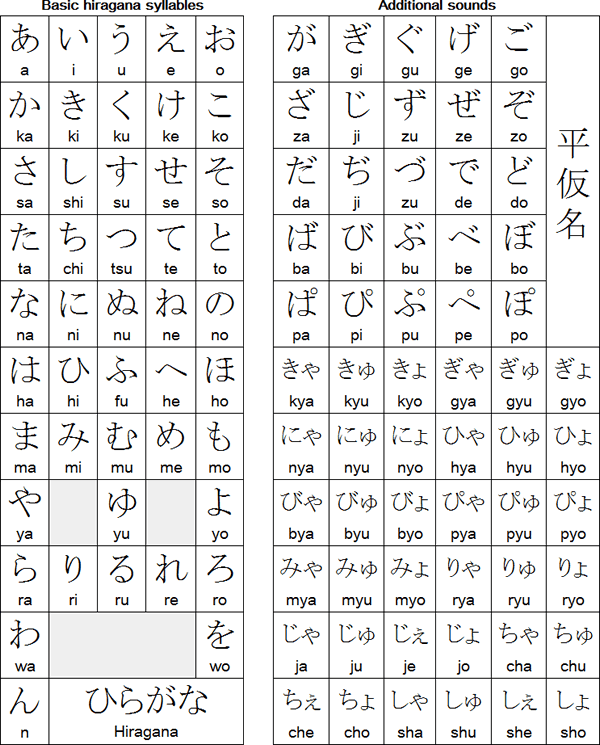
I decided to improve the script charts on the hiragana and katakana pages on Omniglot today – something I’ve been meaning to do to a long time.

Here’s one of the new charts:

Hiragana chart

As well as put improved charts of the kana online, I’ve also put links to Word and PDF versions of the charts for handy offline reference.

Do you think such downloadable charts are useful? Would you like to similar ones for other writing systems?

Berreenyn ghryle

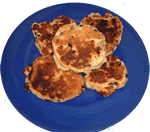
Picau ar y maen

Ren mee berreenyn ghryle Vretnish er yn chied cheayrt jea. Er lhiam dy chur mee red beg rour bainney ayndaue as va y teayst feer ghleiynagh, as lhiann eh rish dagh ooilley red – y rollian fuinnee, my veir as y gryle, agh myr shen hene v’ad mie as blasstal.

Cácaí gridille Bhreatnacha

Rinne mé cácaí gridille Bhreatnacha air an chead uair inne. Tá mé ag smaoineamh go chuir mé barraíocht bainne iontu, dá bhrí sin bhí an taos an-ghreamaitheach agus ghreamaigh sé de gach rud – an crann fuinte, mo mhéar agus an ghrideall, ach mar sin féin bhí siad go maith agus an-bhlásta.

Picau ar y maen

Mi nes i bicau ar y maen am y tro cyntaf ddoe. Dw i’n meddwl roes i tipyn bach gormod o lefrith ynddynt ac roedd y toes yn ludiog iawn, ac mi lynodd o i bopeth – i’r rholbren, i fy mysedd ac i’r gradell, ond er hynny roedden nhw yn dda ac yn blasus.

Kionnaghey arasane

Hoshee mee arasane y chionnaghey jea. T’eh ayns shenn cabbal faggys da laaragh Bangor, as ta tree shamyr lhiabbagh ayn – ram reaynys dooys!

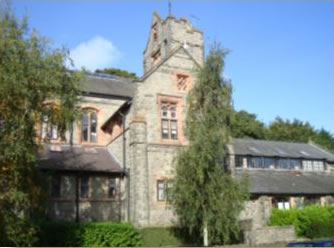
Capel Tabernacl

Árasán a cheannach

Thosaigh mé árasán a cheannach inné. Tá sé i shean séipéal in aice leis lár Bangor, agus tá trí seomra leapa ann – neart spás domhsa!

Prynu fflat

Mi ddechreues i brynu fflat ddoe. Mae o yn hen gapel yn ymyl canolfan Bangor, ac mae tri ystafell wely ynddo – digon o le i mi!

Na’vi

I finally got round to seeing Avatar this week and really enjoyed it. Na’vi, the constructed language used in the film was devised by Paul Frommer, sounds intriguing and there seems to be quite a bit of interest in it. Here are some websites where you can find out more:

Learn Na’vi contains Na’vi-English dictionary, and notes on pronunciation and grammar

Talk Na’vi has videos of the language being used in the film, and about the creation of the language.

Some highlights of Na’vi on language log.

– On YouTube there are a number of videos with details of the language.

– and there’s a page about Na’vi on Wikipedia.

If anyone feels inspired to put together a collection of phrases in Na’vi for Omniglot, please feel free to do so. Here are a few:

Kaltxì – Hello
Ngaru lu fpom srak? – How are you?
Oel ngati kameie – I see you (greeting)
Tsun oe ngahu nìNa’vi pivängkxo a fì’u oeru prrte’ lu – It’s a pleasure to be able to chat with you in Na’vi
Fìskxawngìri tsap’alute sengi oe – I apologise for this moron
Irayo – thank you
Uniltìrantokx – Avatar

Tonnmharcaíocht

An interesting word I heard yesterday on Raidió na Gaeltachta was tonnmharcaíocht or surfing – literally “wave riding”. I hadn’t heard it before, but was able to work out the meaning from its component words. Another word for this kind of surfing is tonnscinneadh (wave glancing / skimming). Surfing the internet is scimeáil ar an Idirlíon, and sciméail also means to skim (milk).

Words related to marcaíocht (riding, to ride / drive / lift), include marcach (rider / horseman), marcaigh (to ride) and marcshlua (cavalry). The root of these is marc, the Old Irish word for horse, which is related to the Welsh march, the Cornish margh, and the Breton marc’h, all of which mean stallion.

The words for mare in Old High German (marah), Norse (marr), and Anglo-Saxon (mearh) as well as the English words mare and marshal are also related and can be traced back to the Proto-Indo-European *mark (horse).

Cennin Pedr

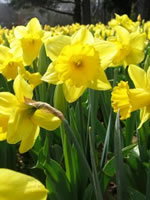
Daffodils / Cennin Pedr / Narcissi

Yesterday was St David’s Day (Dydd Gŵyl Dewi), a day when many Welsh people wear daffodils (cennin Pedr) in honour of their patron saint. The daffodil (cenhinen Bedr) is one of the national symbols of Wales, along with the leek (cenhinen), and the Welsh name for daffodil means “Peter’s leek”. The leek has been a Welsh symbol for many centuries and features prominently in traditional Welsh dishes such as cawl cennin (leek soup). The daffodil became popular as a national symbol during the 19th century, especially among women.

The names for daffodil in Irish, Manx and Scottish Gaelic are similar: lus an chromchinn, lus ny cam-ching and lus a’ chrom-chinn, which mean “bent-headed plant”. Alternative names in Manx include lus ny n’guiy (goose plant) and lus yn arree (Spring plant).

The English word daffodil is thought to comes from the Middle English affodill (asphodel), from the Middle Lation affodillus, from the Latin asphodelus, from the Greek asphodelos, the origin of which is unknown. The initial d perhaps came from a merging of the Dutch definite article de with affodil (Source).

According to Plutarch the Latin name for daffodil, narcissus, comes from the Greek ναρκαώ [narkao] (to numb), which is also the root of narcosis, as the plant which produces numbness or palsy (Source). Although other sources claim that the narcissus was named after Νάρκισσος [Narkissos], the character in Greek myths.

The daffodil or narcissus is a symbol of vanity in the West, while in China it’s a symbol of wealth and good fortune.