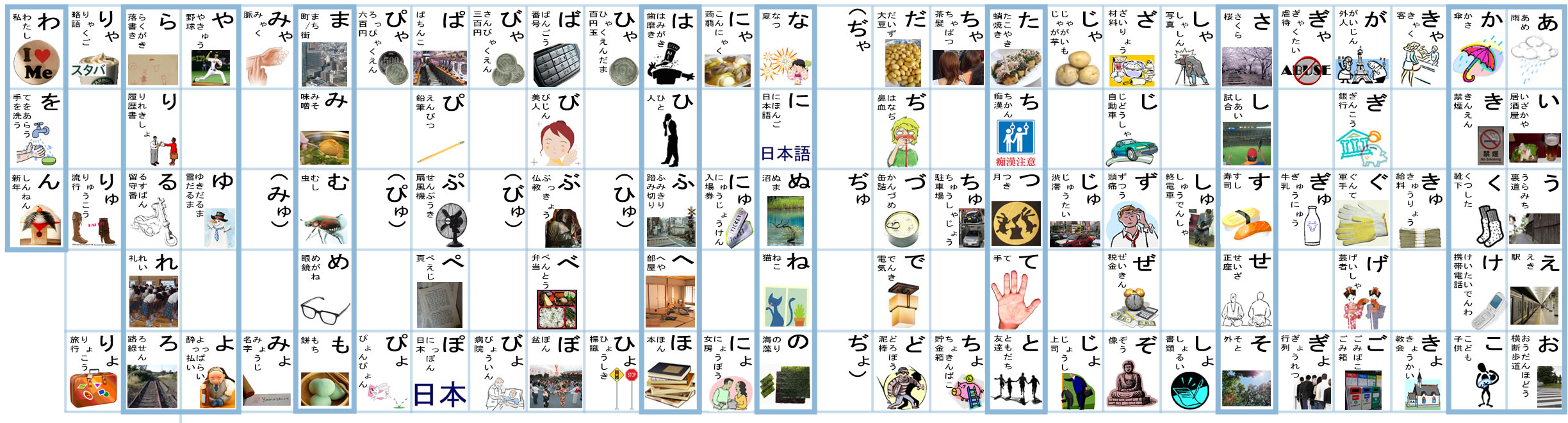
Hiragana developed from Chinese characters, as shown below. Hiragana were originally called onnade or 'women's hand' as were used mainly by women - men wrote in kanji and katakana. By the 10th century, hiragana were used by everybody. The word hiragana means "ordinary syllabic script".
In early versions of hiragana there were often many different characters to represent the same syllable, however the system was eventually simplified so that there was a one-to-one relationship between spoken and written syllables. The present orthography of hiragana was codified by the Japanese government in 1946.
In each column the rōmaji appears on the left, the hiragana symbols in the middle and the kanji from which they developed on the right. There is some dispute about the orgins of some of the symbols
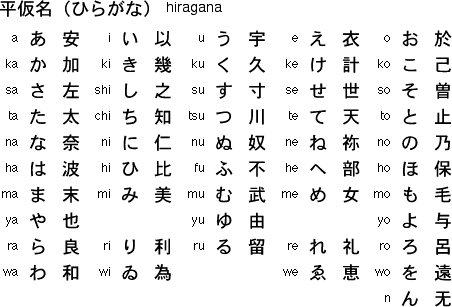
The symbols for 'wi' and 'we' were made obsolete by the Japanese Minsitry of Education in 1946 as part of its language reforms. The symbols 'ha', 'he' and 'wo' are pronounced 'wa', 'e' and 'o' respectively when used as grammatical particles.
The symbols on the right are the basic hiragana syllabary in the order they appear in dictionaries and indices (reading from left to right and top to bottom). Additional sounds (the symbols on the right) are represented by diacritics and combinations of symbols.
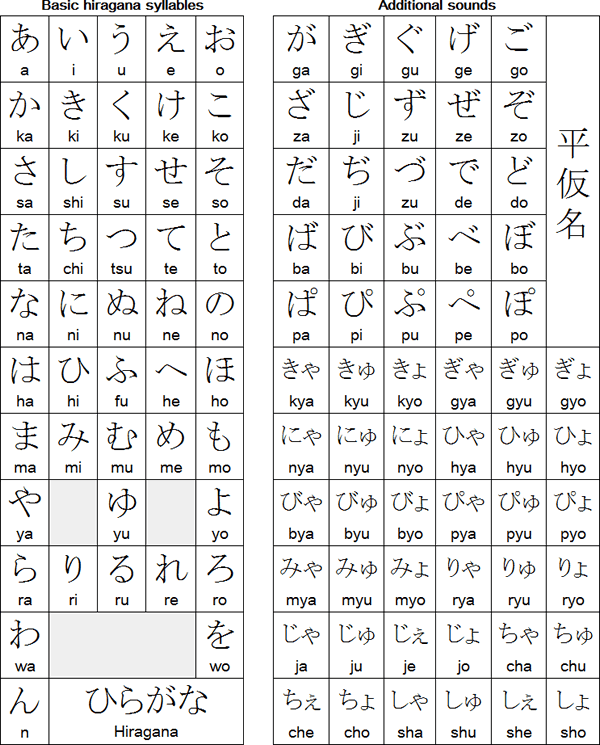

Download this chart in Word, or PDF format (also includes katakana).
See a Hiragana chart by Kayo Takumyo (JPG, 409K).
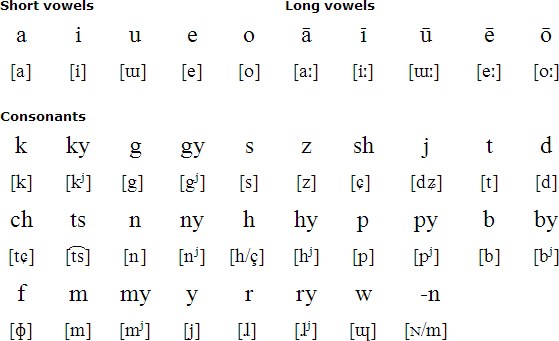
The hiragana syllabary consists of 48 syllables and is mainly used to write word endings, known as okurigana in Japanese. Hiragana are also widely used in materials for children, textbooks, animation and comic books, to write Japanese words which are not normally written with kanji, such as adverbs and some nouns and adjectives, or for words whose kanji are obscure or obselete.
Hiragana are also sometimes written above or along side kanji to indicate pronunciation, especially if the pronunication is obscure or non-standard. Hiragana used in this way are known as furigana or ruby. In horizontal texts, the furigana appear above the kanji and in vertical texts, the furigana appear on the right of the kanji. In newspapers it is a legal requirement for furigana to be attached to kanji which are not included in the official list of the 1,945 most frequently-used kanji. Newspapers in fact rarely use kanji not included in this list.
The furigana in the following text are the small hiragana above or beside the kanji.

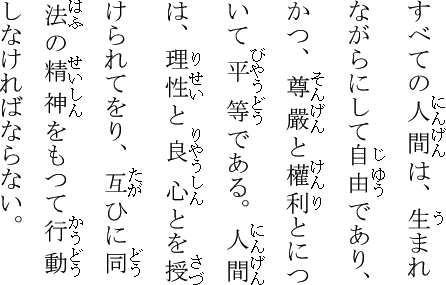
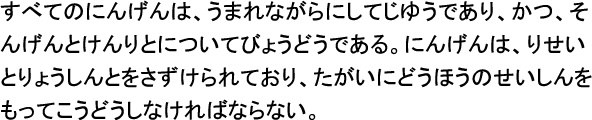

Subete no ningen wa, umare nagara ni shite jiyū de ari, katsu, songen to kenri to ni tsuite byōdō de aru. Ningen wa, risei to ryōshin to o sazukerareteari, tagai ni dōhō no seishin o motte kōdōshinakerebanaranai.
All human beings are born free and equal in dignity and rights. They are endowed with reason and conscience and should act towards one another in a spirit of brotherhood.
(Article 1 of the Universal Declaration of Human Rights)
Hiragana are sometimes used to write words which would normally written with katakana to make them appear more "feminine", particularly in comic books and cartoons for young girls. In children's video games texts are often written entirely in hiragana or katakana.
How to write Hiragana:
Information about Hiragana
https://en.wikipedia.org/wiki/Hiragana
https://www.tofugu.com/japanese/learn-hiragana
http://japanesehiragana.org
Introduction to Japanese | Hiragana | Katakana | Kanji | Rōmaji | Phrases (Useful) | Phrases (Silly) | Numbers | Colours | Time | Dates | Family words | Tower of Babel | Articles | Links | Learning materials

Japanese courses and other resources on Amazon
- Find Japanese Tutors with LanguaTalk
Amami, Hachijō, Japanese, Kikai, Miyakoan, Okinawan, Okinoerabu, Tarama, Tokunoshima, Yaeyama, Yonaguni, Yoron
Afaka, Bamum, Caroline Island Script, Celtiberian, Cherokee, Cypriot, Dunging (Iban), Eskayan, Hiragana, Iberian, Katakana, Kpelle, Loma, Mende (Kikakui), Mwangwego, Nüshu, Nwagụ Aneke, Vai, Yi, Yugtun
Page last modified: 21.08.25
[top]

You can support this site by Buying Me A Coffee, via PayPal or Patreon, or by contributing in other ways.
If you find all the adverts annoying, there is now an Ad-free version of Omniglot which you can access for a small monthly or annual donation.

Note: all links on this site to Amazon.com



[top]