

Kpelle is a member of Mande group of Niger-Congo languages spoken by about 1.3 million people in Liberia and Guinea. The are about 500,000 Kpelle speakers in Guinea, mainly in the forest regions. In Liberia Kpelle is spoken by about 800,000 people, and is taught in schools
The Kpelle syllabary was invented during the 1930s by Chief Gbili of Sanoyea in Bong County in Liberia. He was apparently inspired to create it in a dream. It was used by a number of Kpelle chiefs, their scribes and a few others. They used it to write messages, keep records of taxes, stores and debts, and to write a recipe book. Very little of this material survives because of the civil wars in Liberia. It was used at least until the 1980s.
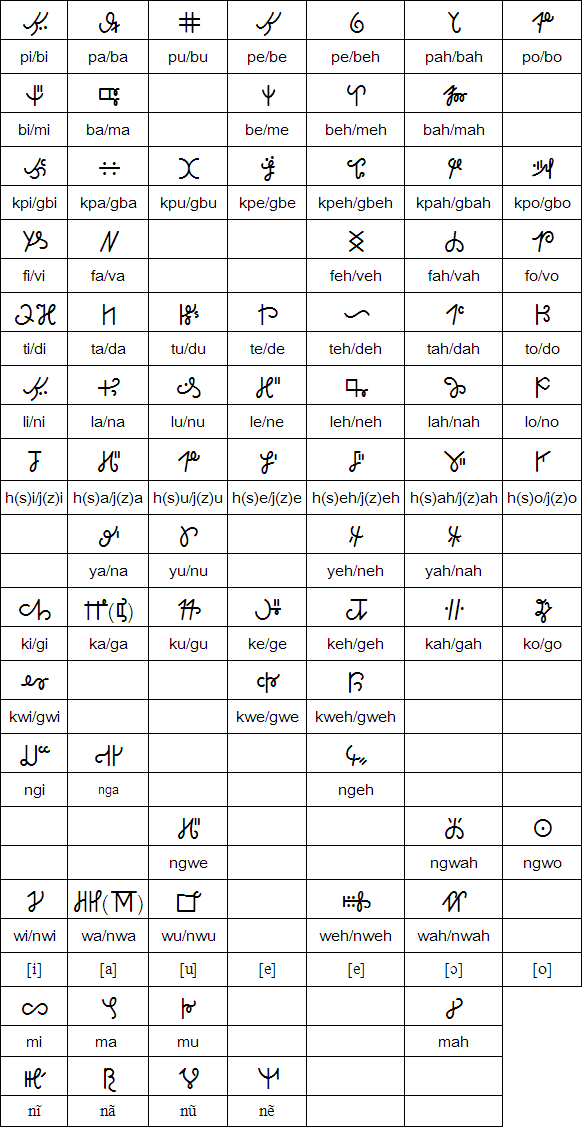
The Kpelle font used on this page was created by Jason Glavy
Source: Mafundikwa, Saki, Afrikan Alphabets - The story of writing in Afrika (New York, Mark Batty, 2004)
Today Kpelle is usually written with a version of the Latin alphabet.
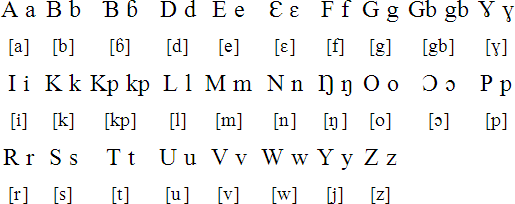
Tones are indicated as follows: á = high tone, à = mid tone, â = falling tone.
Details of the Latin alphabet for Kpelle supplied by Michael Peter Füstumum
Download script charts for Kpelle (Excel)
Nukan gele kaa pələ kaa tanɔn, yiliɓa nu kəle maawiyə pələ da tɔɔi gaa ɲei yɛnɛyii hu kɛpələ kaalɔ tanɔn; di kɛmɛni a nukan ŋaa ɓə gɛɛ hwəkɛli wɛlikɛmaa ə lɔ di luwai.
All human beings are born free and equal in dignity and rights. They are endowed with reason and conscience and should act towards one another in a spirit of brotherhood.
(Article 1 of the Universal Declaration of Human Rights)
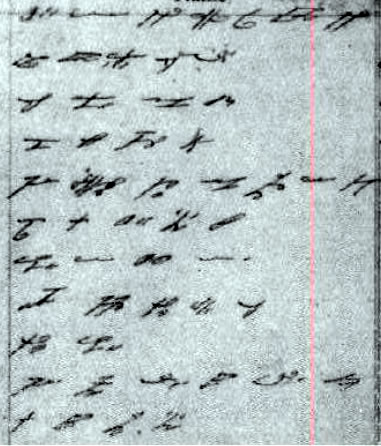
Source: http://www.unicode.org/L2/L2009/09326-kpelle.pdf
Information about Kpelle | Numbers | Tower of Babel
Information about Kpelle
http://en.wikipedia.org/wiki/Kpelle_language
https://en.wikipedia.org/wiki/Kpelle_syllabary
http://www.ritell.org/Resources/Documents/language%20project/Kpelle.pdf
http://www.ethnologue.com/language/gkp
http://www.ethnologue.com/language/xpe
http://www.unicode.org/L2/L2009/09326-kpelle.pdf
Bambara, Bissa, Boko, Busa, Dan, Dioula, Duun, Guro, Kpelle, Loma, Mandinka, Maninka, Mano, Mende, Soninke, Susu, Vai, Yalunka
Afaka, Bamum, Caroline Island Script, Celtiberian, Cherokee, Cypriot, Dunging (Iban), Eskayan, Hiragana, Iberian, Katakana, Kpelle, Loma, Mende (Kikakui), Mwangwego, Nüshu, Nwagụ Aneke, Vai, Yi, Yugtun
Page last modified: 05.07.23
[top]

You can support this site by Buying Me A Coffee, and if you like what you see on this page, you can use the buttons below to share it with people you know.

If you like this site and find it useful, you can support it by making a donation via PayPal or Patreon, or by contributing in other ways. Omniglot is how I make my living.

Note: all links on this site to Amazon.com


[top]


