| français | English | Cymraeg |
|---|---|---|
| la station métérorologique = weather station | gorsaf dywydd | |
| la station balnéaire | seaside resort | tref lan môr |
| la station de ski | ski resort | cyrchfan sgi |
| la station thermale | spa | tref ffynhonnau, sba, ffynhonfa |
| la station de lavage | car wash | golchfa geir, lle golchi ceir |
| l’accord (m) | deal (agreement) | bargen, cynnig |
| hors de portée | beyond/out of reach | allan o gyrraedd, y tu hwnt i’ch cyrraedd |
| à portée (de qn) | within reach (of sb) | o fewn cyrraedd (i rywun) |
| se remettre (de); se rétablir (de) | to recover (from illness) | gwella |
| vertical | vertical | unionsyth, fertigol |
| le kitesurfing | kitesurfing | barcudfyrddio |
| l’élan (m) | elk (European) | elc, cawrgarw |
| l’orignal (m) | moose (Canadian) | elc |
| crise des cinquante | midlife crisis | argyfwng canol oed |
| l’examen | (medical) check up | archwiliad |
| la caisse | crate (for bottles, china) | cawell, bocs rhwyllog, crât, crêt |
| le cageot | crate (for fruit, veg) | cawell, bocs rhwyllog, crât, crêt |
| la vis | screw | sgriw, hoelen |
Category: Welsh (Cymraeg)
Les mots de la semaine
| français | English | Cymraeg |
|---|---|---|
| sauter, sautiller, houblonner | to hop | hopian |
| la musaraigne | shrew | chwistlen, chwistl, llygoden goch |
| le rendez-vous | appointment | trefniad |
| le plâtre | plaster cast | cast plastr |
| l’accessoire | feature (of product, computer, etc) | nodwedd |
| la saillie | (mountain) ledge | sil, silff, ysgafell |
| la balançoire | (playground) swing | siglen |
| le toboggan | (playground) slide | sleid, sglefren, sglefr, llithren |
| le toboggan, la luge | toboggan, sledge | sled, tobogan |
| le toboggan de piscine | water slide | sleid ddŵr |
| euthanasier, (faire) piquer, faire abattre | to put down (an animal) | rhoi i gysgu, difa, lladd |
| le fusilier marin | marine (soldier) | môr-filwr |
| le marines | the Marines | y môr-filwyr |
| la rédaction | (school/college) essay | traethawd |
| mettre au lit, coucher | to put to bed | rhoi/dodi yn ei wely |
| tordre, tortiller | to twist | cyfrodeddu, cordeddu, crychu, plethu |
| se tordre le cheville / le poignet | to twist one’s ankle/wrist | troi’ch ffêr/arddwrn |
| la sueur | sweat | chwys |
| suer | to sweat | chwysu |
| le chewing-gun | chewing gum | gwm cnoi |
Back to Bangor
I finally returned to Bangor today after nearly 3 weeks away – I was only planning to be away for 3 days, but due to the slight mishap in London (a broken ankle), my plans changed a bit.
My mum has looked after me very well, and been doing the cooking, laundry, shopping, etc. I’ll have to find ways to do those things myself back in Bangor.
Last Friday I went to the hospital in Lancaster for a check up on my broken ankle. They put a new plaster cast on it and said that it’s healing well. I can even put a bit of weight on it.The plaster is due to come off at the end of May, and I’ve arranged for this to be done in Ysbyty Gwynedd (Bangor hospital).
I was planning to go to the Polyglot Gathering in Bratislava at the end of May, but have reluctantly decided to cancel that trip. I doubt I’ll be ready for such an adventure as soon as the cast comes off, as it’s likely to take a month or so before I’m fully mobile again.
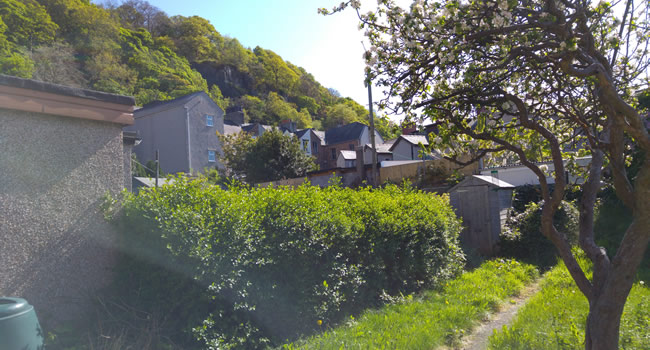
It’s a beautiful day here in Bangor, my apple tree is in bloom, and my garden went a bit wild while I was away (see photo). I’ll need help to tame it, I think.
It was great to hear some Welsh on the train on the way back – I’ve missed it.
Les mots de la semaine
| français | English | Cymraeg |
|---|---|---|
| le boulon | (nut and) bolt | bollt |
| le boulon à oreilles | wing bolt | bollt adeiniogf/asgellog |
| le verrou | bolt (on door) | bollt(en) |
| verrouiller | to bolt (a door) | bolltio (drws) |
| boulonner | to bolt (on) | bolltio |
| engloutir | to bolt (food) | llowcio/claddu/bolgian bwyd |
| boulotter | to tuck (into smth); to eat | claddu bwyd |
| accordeur de piano | piano tuner | tiwniwr pianos dyn tiwnio pianos |
| accorder | to tune (an instrument) | tiwnio |
| battre un record | to break a record | torri/curo record |
| collant | sticky | gludiog/td> |
Protagonists and sidekicks
When listening to The Allusionist podcast today I learnt an interesting word – tritagonist, who was the actor who played the third role in ancient Greek drama.
Tritagonist comes from the Ancient Greek word τρίτἀγωνιστής (triagōnistḗs), from τρίτ (third) and ἀγωνιστής (combatant, participant).
The actors who played the first and second roles in ancient Greek drama were known as the protagonist and deuteragonist, or sidekick. Proto- comes from πρῶτος (first), a superlative of πρό (before), and deuter- from δευτερ (second).
Proto goes back to the Proto-Indo-European *pro/*per- (to go over), which is also the root of:
– Proto-Celtic *ɸro = before, in front of, in addition
– Welsh rhy = too
– Irish ro = too
– Proto-Germanic *fram = from, by, due to
– English from
– Scots frae = from
– Swedish från = from; and fram = forward
– Icelandic frá = from, away from, about
– Latin per = through, by means of, during, and related words in Romance languages.
The antonym of protagonist is antagonist, from ἀντί (against) and ἀγωνιστής (combatant, participant).
Source: Wiktionary
Plains, pianos and floors
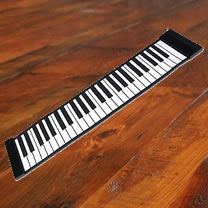
The Welsh word llawr [ɬau̯r] means floor, deck, gallery, stage, platform, cellar, basement, ground, face, and a few other things. I discovered today that it has cognates in all the other Celtic languages:
– leur (Cornish) = floor, ground
– leur (Breton) = area, ground, floor, soil
– lár (Irish) = ground, floor, middle, centre
– làr (Scottish Gaelic) = floor, ground, storey
– laare (Manx) = storey, deck, floor, bottom, flat, set, sill, level
These words all come from the Proto-Celtic *ɸlārom (floor), which comes from the Proto-Indo-European *pleh₂rom or *ploh₂rom, from *pleh₂- (to be flat).
THe PIE word *pleh₂- is the root of many other words, including:
– The English piano, plain, plan, floor and flake
– The Dutch vloer (floor, ground, surface)
– The German Flur (hall, hallway, corridor, stairwell)
– The Italian piano (flat, level, smooth, plane, softly, quietly)
– The Spanish llano (even, flat, level, plain) and plano (plain, level, flat)
– The Latvian: plats, plašs (wide, broad)
– The Lithuanian: platus (wide, broas)
– The Russian плоский (flat, plain, level)
Sources: Wiktionary, Geiriadur Prifysgol Cymru, Maga Cornish Dictionary / Gerlyver Kernewek, Dictionnaires bilingues de Francis Favereau, teanglann.ie, Am Faclair Beag, On-Line Manx Dictionary, Reverso
Cold Wintry Wind
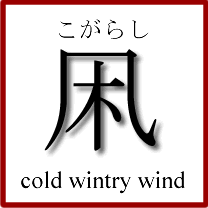
I learnt an interesting Japanese word and kanji today – 凩 (こがらし / kogarashi), which means ‘cold wintry wind’ or ‘the cold wind that reminds us winter is coming’. It is also written 木枯し or 木枯, and is considered ‘untranslatable‘ by some.
The character 凩 is a 国字 (こくじ / kokuji), that is one that was made in Japan rather than being borrowed from Chinese. It combines 几 (ki – armrest, desk, table, screen), which can also mean ‘to envelope; to wrap around’, with 木 (ki / moku – tree, shrub, bush, wood).
Other kokuji include:
– 凧 (いかのぼり; たこ – ikanobori; tako) = kite
– 凪 (なぎ; な.ぐ / nagi; nagu) = lull; calm
– 働く (はたらく / hataraku) = work
– 峠 (とうげ / tōge) = mountain peak; mountain pass; climax; crest
– 杢 (モク / moku) = woodworker
– 杣 (そま / soma) = timber; lumber; woodcutter
In Welsh there is a word that is similar to 凩: rhewynt, meaning an ‘ice-cold wind’, from rhew (frost, ice) and gwynt (wind, breath). There are also a number of other interesting wind-related expressions:
– gwynt carthen = breeze created by shaking a blanket (said comtemptuously of a preacher’s artificial eloquence)
– gwynt coch Amwythig = the east wind (“the red / sorching wind of Shrewsbury”)
– gwynt y creigiau = north-west wind (“wind of the [Snowdonian] rocks”)
– gwynt ffroen yr ych = the east wind (“the wind the ox’s nostril”)
– gwynt pilyn = breeze created by shaking a sack in order to separate the chaff from the grain when wwinnowing (“wind of a garment”)
– gwynt traed y meirw = the east wind (“the wind of dead men’s feet” – refers to the custom of burying people with their feet to the east)
Sources: http://www.sljfaq.org/afaq/kokuji-list.html, Geiriadur yr Academi, Geiriadur Prifysgol Cymru
Are there equivalents of 凩 (kogarashi) in other languages?
Or other interesting wind-related expressions?
Going spooning
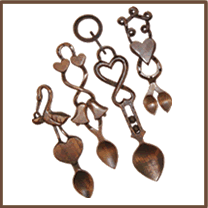
There’s a tradition in Wales of men carving spoons out of wood and presenting them to the ladies they love. If a lady accepts a spoon, then she and the man are considered a couple – engagements and weddings were apparently not common in rural Wales until the 18th century [source]. The websites that discuss the love spoon (llwyau caru) tradition usually mention that it’s the origin of the English expression “to go spooning”, which is one I haven’t come across before.
A quick search on Google finds a number of books that include the phrase “to go spooning”, and from the context it appears to mean to go courting, but it’s not always clear. Are you familiar with this phrase at all?
Spooning has another meaning – “To lie down behind and against (another person) so that both bodies face the same direction with the knees drawn up slightly like nested spoons” [source], but I don’t think that’s what “to go spooning” is about.
Weathered pagodas and stretching times

The word for weather in Russian is погода (pogoda) [pɐˈɡodə], which sounds more or less like pagoda in English.
The English word pagoda, which refers to an Asian religious building, especially a multistory Buddhist tower, comes from Portuguese pagode, which comes via Tamil from the Sanskrit भगवती (Bhagavatī, name of a goddess) or भागवत (Bhāgavata, “follower of Bhagavatī”).
In French the words for weather, temps, also means time and tense, and comes from the Latin tempus (time, period, age, tense, weather), from the Proto-Indo-European *tempos (stretch), from the root *temp- (to stetch, string), which is also the root of the English word tempest, via the Latin tempestas (storm), and the English word tense.
Breton also has one word for time and weather – amzer, which comes from the Proto-Celtic *amsterā (time, moment), which is also the root of the Irish aimsir (weather, time and tense), the Manx emshir (weather, time and tense) and the Scottish Gaelic aimsir (climate, weather, season, era, time, reign), the Welsh amser (time, age, tense), and the Cornish amser (tense).
Sources: www.study-languages-online.com, Wiktionary
I’ve started putting together a new section on Omniglot featuring weather-related words and phrases. So far I have pages in Czech, Russian and Welsh.
In the UK we talk about the weather quite a bit. It’s (usually) a neutral and uncontroversial topic, and while some people are genuinely fascinated by it, for most of us it’s just a way to start a conversation. Do people do this is other countries? Or do you use of topics as conversation starters?
Unfolding developments
The word for to develop in Welsh is datblygu, which is a combination of dad (un-) and plygu (to fold), so Welsh developments “unfold”.
Datblygu also means “to evolve; reveal, disclose, display. to unfold, unwrap, unfurl, unroll, spread out.”
Plygu means “to (cause to) bend, deflect, bow, stoop, refract (light); fold, wrap. to subdue, subjugate, overcome; apply twist (meaning), distort, pervert; submit, yield, waver.”
Plygu comes from the Latin plicō (to fold, coil), from the Proto-Indo-European *pleḱ- (to plait, to weave). The Latin word also means to arrive, which comes from sailors folding their ship’s sails when arriving somewhere.
Plygu is also found in:
– amblygu = to wrap around, surround, wrap together, lap, envelop, cover. (am = around).
– atblygu = to unfold, refold, fold back (at- = to(wards))
– arblygu = to apply, adapt (ar- = fore, opposite)
– darblygu = to deflect (dar- = intensifer)
– diblygu = to unfold explicate, unravel (di- = negative)
– goblygu = to bend, bow, nod, fold, wrap up, leap, cover, hide. to conquer; imply, involve, implicate (go- = sub-)
– gwrthblygu = to bend back, fold back; reflect; pervert (gwrth = against, contra-)
– ymblygu =to bend, bow, stoop (ym- = reflexive)
Source: Geiriadur Prifysgol Cymru and Wiktionary