

The Samaritan alphabet was derived from the Paleo-Hebrew alphabet. According to the Bible, the Samaritans came originally from Mesopotamia, then moved to Palestine at the beginning of the 1st millennium BC and adopted the Jewish religion and culture. The Samaritans themselves claim descent from the northern tribes of Israel. Evidence from recent DNA tests supports this claim and shows they are related to the Israelites through the paternal line.
The Samaritan alphabet is still used by Samaritans in the city of Nablus and in the Samaritan quarter of Holon. There are currently just over 700 Samaritans.
Samaritan Hebrew, a descendant of Biblical Hebrew used by Samaritans as a liturgical language.
Samaritan Aramaic, a dialect of Aramaic used by the Samaritans in their sacred and scholarly literature.
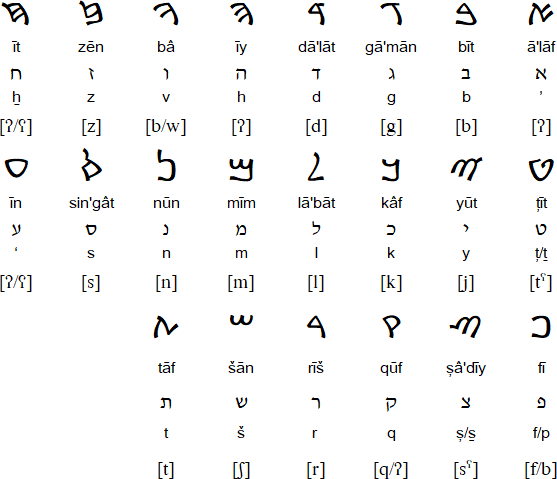
Download an alphabet chart for Samaritan (Excel)
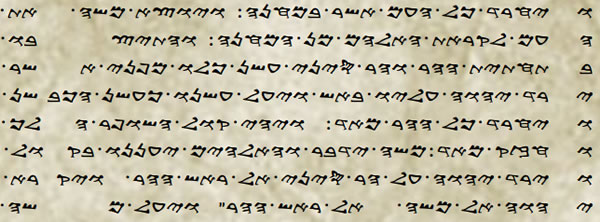
Source: http://culmus.sourceforge.net/ancient/Samples/Hebrew-Samaritan.pdf
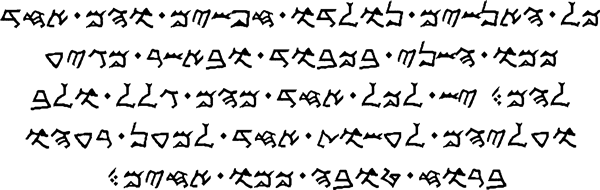
All human beings are born free and equal in dignity and rights. They
are endowed with reason and conscience and should act towards one another
in a spirit of brotherhood.
(Article 1 of the Universal Declaration of Human Rights)
Information about the Samaritan script and language
http://en.wikipedia.org/wiki/Samaritan_alphabet
http://www.mystae.com/reflections/messiah/scripts/alphabet.html
http://culmus.sourceforge.net/ancient/Samples/Hebrew-Samaritan.pdf
http://en.wikipedia.org/wiki/Samaritan_Hebrew
Information about the Samaritan people
http://www.the-samaritans.com/
http://www.khazaria.com/genetics/abstracts.html
http://en.wikipedia.org/wiki/Samaritan
https://www.princeton.edu/~achaney/tmve/wiki100k/docs/Samaritan.html
Free Samaritan font
http://culmus.sourceforge.net/ancient/index.html
Ancient Berber, Arabic, Aramaic, Chorasmian, Elymaic, Hatran, Hebrew, Manichaean, Nabataean, North Arabian, Pahlavi, Palmyrene, Parthian, Phoenician, Paleo-Hebrew, Proto-Sinaitic / Proto-Canaanite, Psalter, Punic, Sabaean, Samaritan, Sogdian, South Arabian, Syriac, Tifinagh, Ugaritic
Page last modified: 28.09.23
[top]

Note: all links on this site to Amazon.com


You can support this site by Buying Me A Coffee, via PayPal or Patreon, or by contributing in other ways.
If you find all the adverts annoying, there is now an Ad-free version of Omniglot which you can access for a small monthly or annual donation.

This website and its content is copyright of Simon Ager - © Simon Ager 1998-2026. All rights reserved. All images were created by me, unless otherwise indicated. Feel free to use them for personal, educational or non-commercial purposes, and don't forget to mention where they came from. More details about copyright

[top]


