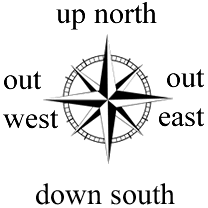
This week I learnt some interesting weather-related phrases in Swedish on Memrise, including norrut (up north / northward), söderut (down south / southward), österut (out east / eastward) and västerut (out west / westward).
Examples of how they are used include:
- Upproret blir mer allmänt och går norrut = The rising is spreading and moving northwards
- Enandet, som skedde i rätt tid, jämnar vägen för utvidgningen österut = This prompt agreement paves the way to enlargement eastward
- Det blir regn västerut = There will be rain out west
- Det klarnar nog upp söderut = It’ll probably clear up down south
In Swedish they all have the ut (out) in them, so more literal translations of norrut and söderut would be “out north” and “out south”, or even “north out” and “south out”.
These sound wrong in English, at least to my ears. To me north is up and south is down, so it makes sense to say up north and down south, although I’m not sure why we say out east/west. Does anybody know? Are there other ways to refer to directions?
In Irish, and other Gaelic languages, the words for directions change depending on whether you’re in the north, going north, coming from the north, and so on. For example:
- tuaisceart = north, northern, ó thuaidh = north of / going north, aduaigh = from the north
- deisceart = south, southern, ó dheas = south of / going south, aneas = from the south