Flan cupboards

A Welsh plygain song I’ve been learning recently with some friends (Carol y Swper) features the word fflangell in the line “Ein Meichiau a’n Meddyg dan fflangell Iddweig”.

We weren’t sure what it meant at first, and guessed that it was some kind of container for a flan or a flan cupboard. A fflan is a flan, and cell means cell or bower, and in compound words can mean a container or building. For example oergell (cold cell) is a fridge, rhewgell (frost/ice cell) is a freezer, and llyfrgell (book cell) is a library.

So we thought the line meant something like “Our arms and doctor under the Jewish flan cupboard.” Hilarity ensued. It actually means “Our Surety and Healer under the Jewish scourge.”

You can hear the whole song at:

We will be singing in a plygain service in Bangor cathedral starting at 7pm on Friday 15th January as Parti Min Menai.

Do you have any examples of mistranslated or misheard song lyrics?

Big fun!

A friend of mine who is learning Welsh likes to translate Welsh expressions literally and then use them in English. One Welsh equivalent of goodbye is hwyl fawr [hʊɨl vaur], which he translates as “big fun”, which sounds quite funny in English. Do any other languages have a phrase used when parting that has a similar meaning?

The Geiriadur Prifysgol Cymru explains hwyl fawr as “a valediction, roughly equivalent to ‘All the best!’, or ‘Cheers!’. Which should not be confused with yr hwyl fawr, which is ‘the principal sail of a ship, mail-sail or main-sheet.’

hwyl can also mean:
– sail (of ship, windmill, etc), sheet, covering, pall
– journey, progress, revolution, orbit, course, route, career, rush, assault, attack
– healthy physical or mental condition, good form, one’s right senses, wits; tune (of musical instrument); temper, mood, frame of mind; nature disposition; fervour, ecstasy, gusto, zest
– merry-making, hilarity, jollity, mirth, gaiety, amusement, fun, humour

Some expressions featuring hwyl include:
– am hwyl = for fun, by way of a joke
– hwyl dda = fine state of health; good spirits, good mood
– hwyl ddrwg = physical indisposition; bad mood
– cael hwyl = to have fun, enjoy oneself, make good progress
– cael hwyl am ben (rhywun) = to make fun of (someone)
– pob hwyl = similar to hwyl fawr

Do you use literal translations of foreign expressions in your own language like this?

Les mots de la semaine

français English Cymraeg
avoir conscience (de qch) (to be) aware (of) ymwybodol (o); gwybod (am)
se rendre compte de to become aware of dod yn gyfarwydd â;
dod yn ymwybodol o;
dod i wybod
l’intoxication (f) alimentaire food poisoning gwenwyn bwyd
souscrire à to subscribe (to an opinion) cefnogi; arddel; coleddu
l’ovation (f) debout standing ovation cymeradwyaeth sefyll
on s’est levé pour l’acclaimer he was given a standing ovation cododd pawb i’w gymeradwyo
contrebandier smuggler smyglwr
trafiquant de drogue drug smuggler smyglwr cyffuriau
draguer to dredge (a river) carthu
les ouvrages anticrues;
les ouvrages de protection contre les eaux
flood defences amddiffynfeydd llifogydd
la zone inondable flood plain gorlifdir; gwastatir; llifwaddod
être en crue to flood (river) gorlifo; llifo
occasionnel occasional ambell; ysbeidiol
la table d’appoint occasional table bwrdd bach
la flaque (d’eau) puddle pwll; pwdel

Les mots de la semaine

français English Cymraeg
adroit dexterous deheuig; llawdde; medrus
habile; qualifié skilled medrus; celfydd; crefftus
la trappe trapdoor trapddor
resquilleur free-loader sbwnjwr; progiwr
contagieux; infectieux infectious heintus; heintol
contagieux contagious heintus; ymledol
s’inviter à; entrer sans invitation to gatecrash (a party) ymwthio (i barti); gwthio’ch ffordd
la pâte brisée shortcrust pastry crwst brau
le poivron sweet pepper pupryn melys
directeur de thèse academic supervisor goruchwyliwr; arolygydd
les tissus d’ameublement (m) soft furnishings carpedi a llenni
la palourde clam cragen fylchog
la soupe de poisson chowder cawl
la semaine blanche reading week wythnos ddarllen

Les mots de la semaine

français English Cymraeg
la fiche flash card cerdyn fflach
le dispositif d’écoute; le micro caché bug (listening device)
le bogue bug (computer) nam; diffyg
le virus; le microbe bug (germ) byg; clust
l’insecte (m); la bestiole bug (insect) pryf
mangeable edible (palatable) bwytadwy
comestible edible (safe to eat) da i’w fwyta
tremper to dunk gwlychu; trochi
trempé soaked gwlyb
trempé jusqu’aux os soaked to the skin gwlyb diferol; gwlyb diferol; gwlyb at y croen
un pétard mouillé damp squib matsien wleb
le pigeonneau squab (baby pigeon) cyw colomen
le fruit de l’imagination figment of the imagination dychmygu pethau; ffrwyth eich dychymyg

Wysinnwyg

The other day I listened to a programme on BBC Radio 4 with an unusual title – Wysinnwyg. When I first saw the title of immediately thought it was a Welsh word, although not one I’d come across before, and I tried to work out what it might mean. I couldn’t find it in any Welsh dictionary, so assumed it was a made-up word. After listening to the programme I realised it was a variation on wysiwyg (what you see is what you get), which also looks Welsh, and means “what you see is not necessarily what you get”.

There aren’t very many Welsh words that start with w, in fact, and many of them are loanwords from English. Here are some examples:

– waldio [ˈʊaldɪɔ] = to beat, to thrash
– wb [ʊb] / wbwb [ˈʊbʊb] = wi! oh! alas!
– wedi[ˈʊɛdɪ] = after
– wedyn [ˈʊɛdɨn] = afterwards
– weithiau [ˈʊɛɪθɪaɨ] = sometimes
– wele [ˈʊɛlɛ] = behold!
– wfft [ʊft] = fie! for shame!
– wfftian [ˈʊftɪan] = to flout
– wit-wat [ˈʊɪtʊat] = fickle
– wtio [ˈʊtɪɔ] = to boo
– wrth [ʊrθ] = by, with, to, compared with, because
– wy [ʊɨ] = egg
– wyneb [ˈʊɨnɛb] = face, surface
– wyth [ʊɨθ] = eight
– wythnos [ˈʊɨθnɔs] = week (eight-night)

Do you ever see acronyms or made-up words and think they are from a particular language? Or see words in one language and think they’re really from another language?

Whenever I see words with w’s and y’s and double l’s I think of Welsh. So Amarillo looks like a Welsh place name to me.

Les mots de la semaine

français English Cymraeg
la charnière; le gond hinge colyn; colfach; crogfach
le pot-de-vin bribe llwgrwobrwy; llwgrwobr; cil-dwrn
acheter; soudoyer; offirir des pots-de-vin to bribe llygru; prynu; llwgrwobrwyo; rhoi cil-dwrn
la corruption; la subornation bribery llwgrwobrwyaeth; llwgrwobrwyad
la corruption corruption llygredd; llygredigaeth
corrompu(e) corrupt (person) llygredig; llwgr
corrompre to corrupt llygru; difetha
le robinet à flotteur ball-cock tap pelen
l’accent (m) emphasis (vocal stress) pwyslais; pwys
le mot composé compound word gair cyfansawdd; cyfansoddair
le mot-valise portmanteau word cyfansoddair cywasgedig

Back in Bangor

I arrived back from New York a few hours ago after an overnight flight from JFK to Manchester. The flight went smoothly, apart from a bit if bumpiness at one point, and I managed to sleep a bit. The sun was shining in Manchester and in Bangor, though it’s a lot cooler here than it was in New York.

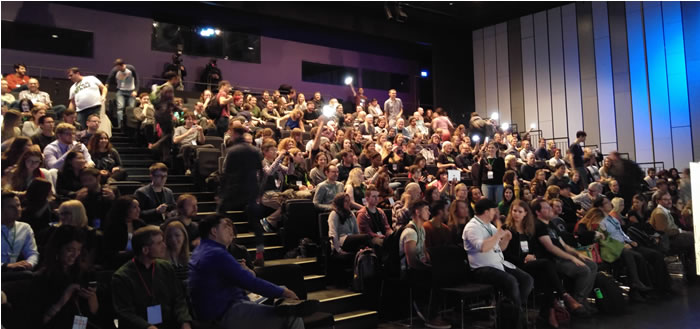
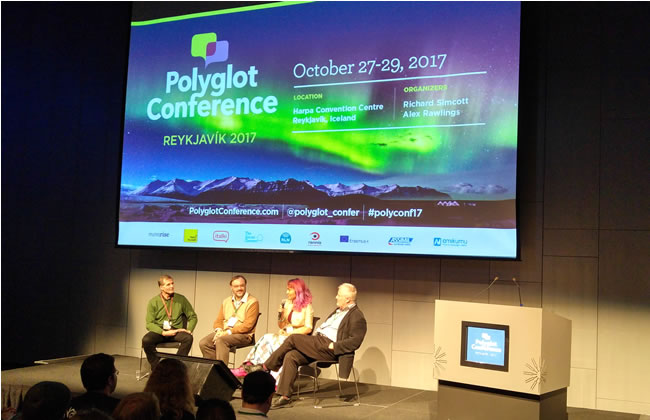
The second and final day of the conference was great with some interesting talks and lots of opportunities to practise languages. In the evening quite a few polyglots went to a roof top bar with great views and I spoke quite a lot of Welsh, Irish and Mandarin, and bits and pieces of my other languages.

On Monday morning I went on a language-spotting trip to Queens with a few other polyglots, and we found at least 15 different languages there. In the afternoon I went to a kind of book fair – one of the conference organisers was gvien many language courses, dictionaries and other language-related books by a publisher, and she decided to share them. Her apartment is in The Asonia, a very elegant former hotel in the Upper West Side of Manhattan. After that we went to bar in Brooklyn for some more socialising and polyglottery.

Yesterday morning I finally made it to Staten Island, and also walked the entire length of Central Park – 2.5 miles, though it felt further with my heavy bag, and getting lost. Then I headed to the airport. If I’d arrived earlier on Friday I would have gone to a polyglot picnic in Central Park, but by the time I got out of the airport and into Manhattan, it was finished.

So now I’m trying to catch up with the emails that arrived while I was away. If you’ve written to me recently and haven’t yet received a reply, please be patient.

Polyglot Conference, New York

This weekend I am in New York for the 2015 Polyglot Conference. I arrived yesterday afternoon after an uneventful flight from Manchester. It took a couple of hours to get out of the airport, and another hour or so to Manhattan.

Last night I met up with some other polyglots near the Statan Island ferry terminal – we were planning to take the ferry over to Statan Island, but unfortunately it started raining heavily and we decided to postpone the trip. We explored Lower Manhattan and Greenwich Village for a while, then I went home, while the others went on to a bar.

The conference started this morning at the SVA Chelsea Theater, which is just around the corner from where I’m staying. There were talks all day about a variety of interesting subjects, including Forensic Linguistics, Proto-Indo-European and Lakota language revival. There are plenty of people here who I know from previous polyglot events, and I’ve met lots of new people.

So far I’ve spoken English, French, Spanish, Portuguese, German, Mandarin, Cantonese, Taiwanese, Japanese, Welsh, Irish, Scottish Gaelic, Manx, Esperanto and Toki Pona, and have met people who speak various other languages.

The conference continues tomorrow, and then I have a couple of days of sightseeing before returning to the UK.

Irish and Ndebele

Yesterday I went to Global Café, a group for international students which I’ve been going to on and off since I was a student myself. I use it as a chance to meet people and practise my languages, and I got to speak quite a few different languages last night, including Welsh, French, Irish, Mandarin, Cantonese, Taiwanese and German. There were also speakers of Vietnamese, Arabic, Malay, Northern Ndebele, and probably other languages.

The most linguistically interesting person I met there was a guy who grew up in Ireland where he spoke Northern Ndebele at home, and was educated through the medium of Irish. He also learnt English and French at school, and is currently working on Mandarin and Welsh. His parents come from Zimbabwe, and his dad speaks about 10 languages. He had a bit of trouble with my Ulster Irish, but we managed to communicate okay. I don’t think I’ve met anyone else who speaks a Bantu and a Celtic language before.

What is the most unusual combination of languages you’ve come across?