
Nizaa is member of the Mambiloid group of the Benue-Congo branch of the Niger-Congo language family. It is spoken in the Adamawa Region in northern Cameroon. In particular, it is spoken in and around the town of Galim in the south of the Faro-et-Déo department in the northwest of Adamawa Region. The numbers of speakers of Nizaa is possibly between 2,000 and 10,000.
Nizaa is also known as Suga, Ssuga, Galim, Nyamnyam, Nyemnyem, Njemnjem, Jemjem, Sewe or Mengaka. Few Nizaa are literate in their language or in other languages. Those that are literate tend to read and write in Fula using the Arabic script. Many Nizaa people speak Hausa and/or French, which are official languages in Cameroon.
There are ways to write Nizaa with the Latin alphabet which is not widely used as few people are able to read and write in Nizaa. The language was first written by missionaries in the mid-20th century. Since then, efforts have been made to standardize written Nizaa based on the General Alphabet of Cameroon Languages, which was created in 1979.
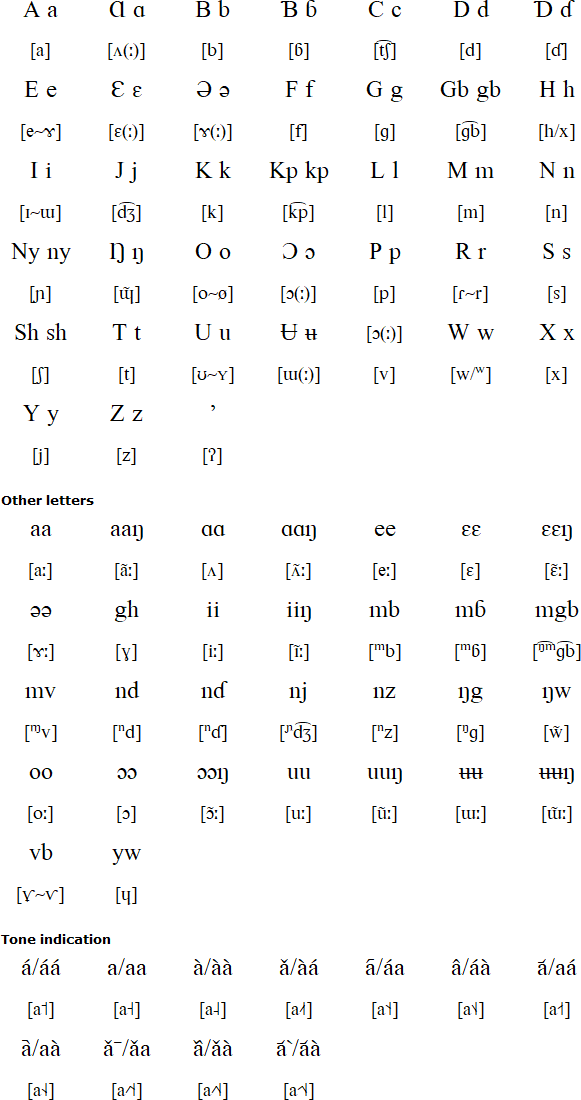
Download an alphabet chart for Nizaa (Excel)
Details of the Nizaa alphabet provided by Wolfram Siegel (PDF)
Ŋu wààwu se kekira᷇, ɓulαὰŋ sewu mbân kùù fɔ́ɔ̀ ɗag gewunâ, yɛ́ɛ́wú-ŋwa᷄ kùù kpááŋ nìwà.
His grandchildren have seen and know, they saw the place grandpa's staff went and fell into, they do not want to tell him.
Source: https://en.wikipedia.org/wiki/Nizaa_language#Sample_text
Information about Nizaa | Numbers
Information about Nizaa
https://en.wikipedia.org/wiki/Nizaa_language
https://glottolog.org/resource/languoid/id/suga1248
https://lingweb.eva.mpg.de/channumerals/Nizaa.htm
Abon, Bafanji, Bebe, Bekwarra, Daka, Ipulo, Isu, Jagham, Jarawa, Kemezung, Kenyang, Ki, Koshin, Kung, Mambila, Mbe, Mbuʼ, Medumba, Metaʼ, Mundabli-Mufu, Mundani, Mungbam, Naki, Ndoola, Ngwo, Noni, Nizaa, Pinyin, Saari, Tiv, Vute, Weh, Yambeta
Languages written with the Latin alphabet
Page created: 21.08.23. Last modified: 21.08.26
[top]

You can support this site by Buying Me A Coffee, via PayPal or Patreon, or by contributing in other ways.
If you find all the adverts annoying, there is now an Ad-free version of Omniglot which you can access for a small monthly or annual donation.

Note: all links on this site to Amazon.com



[top]


