Good Intentions

One of the things that came up in conversation last night was the expression the road to hell is paved with good intentions. This got me wondering about where it comes from and whether there are similar phrases in other languages.

The Road to Hell

The road to hell is paved with good intentions means that well-intended acts can potentially lead to disasters. Phrases with a similar meaning is hell is full of good meanings, but heaven is full of good works and the streets of hell are paved with promises [source].

The origins of this phrase are not known, but there have been sayings with a similar meaning going back a long way. For example, in the Aeneid (book 6, lines 126-129), Virgil wrote:

“facilis descensus Averno;
noctes atque dies patet atri ianua Ditis;
sed revocare gradum superasque evadere ad auras,
hoc opus, hic labor est” [source].
“The gates of hell are open night and day;
Smooth the descent, and easy is the way:
But to return, and view the cheerful skies,
In this the task and mighty labor lies”
[source].

In the Bible (Ecclesiasticus 21:10) we have:

“The way of sinners is made plain with stones, but at the end thereof is the pit of hell.”

In around 1604, Bernard Clairvaux is claimed to have written, though probably didn’t:

L’enfer est plein de bonnes volontés ou désirs
“Hell is full of good meanings and wills”

In 1670 in A Collection of English Proverbs collected by John Ray we have:

“Hell is full of good meanings and wishes”

In 1741 John Wesley wrote in his sermon The Almost Christian:

“‘Hell is paved’, saith one, ‘with good intentions.'”

In 1791 in James Boswell’s biography of Samuel Johnson, Boswell quotes Johnson as saying to an acquaintance:

“Sir, hell is paved with good intentions.”

In 1811 in an English translation of a book by Johann Jacob Rambach we find:

“Der Weg zur Höllen sey mit lauter gutem Vorsatz gepflastert.”
“The road to hell is paved with good resolutions”

Related phrases in other languages include:

  • Catalan: l’infern està ple de bones intencions
    (Hell is full of good intentions.)
  • French: l’enfer est pavé de bonnes intentions
    (Hell is paved with good intentions)
  • Mandarin Chinese: 好心没好报 [好心沒好報] (hǎoxīn méi hǎobào)
    (Good intentions don’t go unrewarded)
  • Spanish: el infierno está empedrado de buenas intenciones
    (Hell is paved with good intentions)

How about in other languages?

Sources and more information about these expressions
https://en.wikipedia.org/wiki/The_road_to_hell_is_paved_with_good_intentions
https://www.phrases.org.uk/meanings/the-road-to-hell-is-paved-with-good-intentions.html
https://idiomorigins.org/origin/road-to-hell-is-paved-with-good-intentions

The Fastest Way to Learn Japanese Guaranteed with JapanesePod101.com


Where Three Roads Meet

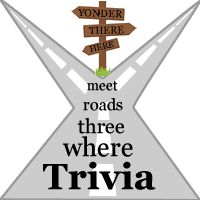
Trivia - where three roads meet

I learned the other day that the word trivia (insignificant trifles of little importance), comes from the Latin trivia, the plural of trivium – crossroads, public space, or literally “a place where three roads meet”. From trēs (three) and via (road, street, way, journey, march, passage, way method).

Apparently this term came to be used for anything commonplace. Also, beginners courses in universities used to be called trivium, and the word came be used to refer to things that are basic, simple or trivial [source].

The Latin word via comes from the Proto-Indo-European *weǵʰ- (to bring, to transport), which is the root of such English words as way, wagon, wain (as in hay wain), weigh, wag, vehicle, vector, voyage, obvious and devious [source].