A Wanderwort is term used in linguistics to refer to a word that has spread to many different languages, often via trade. It was borrowed from German and comes from wandern (to wander) and Wort (word), so it’s a “wandering word”. The plural is Wanderwörter, Wanderworte or Wanderworts [source]. The origins of some such words goes back to ancient trade routes from the Bronze Age, and it can be difficult to trace which language they ultimately came from. Examples include copper, silver, mint and wine [source].
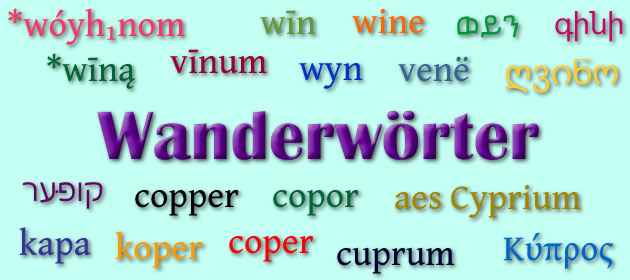
Another example of a Wanderwort is:
tea, which comes from the Dutch thee (tea), from 茶 (tê – tea) in the Amoy dialect of Southern Min (Min Nan), from the Old Chinese *l’aː (bitter plant), from the Proto-Sino-Tibetan *s-la (leaf, tea) [source].
There are similar words for tea in many other languages, including ᑎᕀ (tiy) in Cree, tae in Irish, tī in Maori and టీ (ṭī) in Telugu. These words arrived in Europe and elsewhere thanks to the Dutch East India Company, who brought tea by sea from Amoy [source].
The word chai which in English is short for masala chai, refers to a beverage made with black teas, steamed milk and sweet spices, based loosely on Indian recipes. It comes from from the Hindi-Urdu चाय / چائے (cāy – tea), from the Persian چای (čây – tea), from the Chinese 茶 (chá – tea) [source].
Languages that got their tea overland generally have a word for tea like chai or cha, including цай / ᠴᠠᠢ (tsay – tea) in Mongolian, चाय (cāy – tea) in Hindi, чай (čaj – tea) in Russian, ชา (chaa – tea) in Thai, and ca (tea) in Malay [source].
What I find fascinating about Wanderwörter like tea/chai is how they trace not just language contact but actual trade routes and cultural exchange. The “t/te” vs. “ch/cha” split almost works like a linguistic map — sea trade vs. land trade. It’s amazing how a single commodity can leave such a clear fingerprint in so many unrelated languages.
I find it fascinating how Wanderwörter traces actual commerce routes and cultural exchange in addition to language contact. The “t/te” vs. “ch/cha” division almost functions like a linguistic map — sea trade vs. land trade. It is incredible how a single item can leave such a distinct mark in so many different languages.
Wow, this explanation of Wanderwörter is fascinating! I never realized how trade and cultural exchange shaped the words we use today. The examples with “tea” really highlight how a single product can influence language across continents. It’s interesting to see how overland and sea routes created different words for the same thing, like “cha” versus “tea.” I’d love to learn more about other common Wanderwörter that have traveled across multiple languages.
There are similar words for tea in many other languages, including ᑎᕀ (tiy) in Cree, tae in Irish, tī in Maori and టీ (ṭī) in Telugu. These words arrived in Europe and elsewhere thanks to the Dutch East India Company, who brought tea by sea from Amoy