
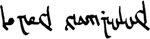
The Bulughman alphabet was invented by TJ to write his conlang of the same name. The conlang is spoken by nomadic people that live on a hypothetical world on the eastern boundaries where they met Alexander, a conquestador, who taught them how to write their own language and communicate.
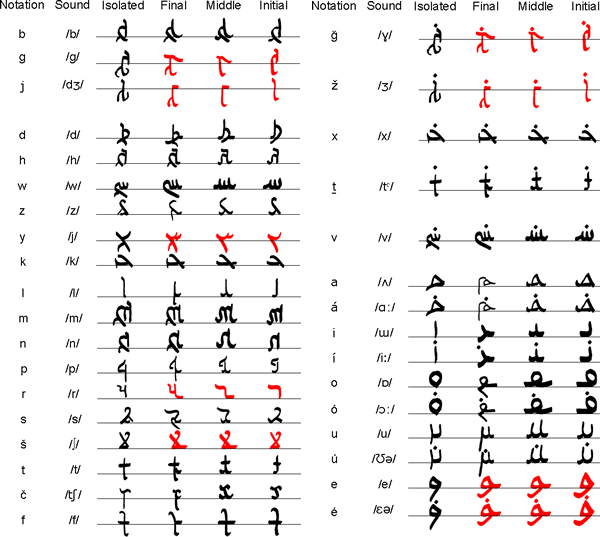
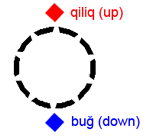
The dots are used to change the sounds of some letters; Qiliq (above) changes the sounds of some letters to something else as shown in the charts. Bugh (below) is a mark of stress (double letters).
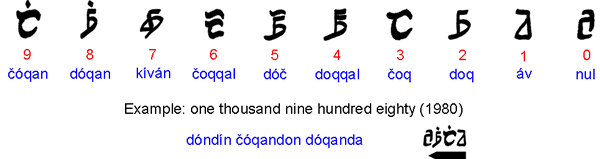
The numbers are written from right to left as well and as they are said. Eg. 1980 becomes 0891.
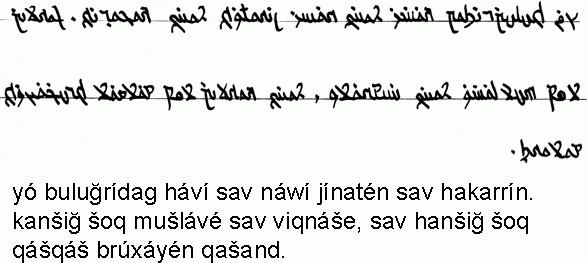
Listen to this textndfiles/udhr/udhr_bulughman.mp3&autostart=no&loop=no&random=no&remote=no&debug=no">
If you have any questions about the Bulughman alphabet, you can contact TJ at: lonelytj@hotmail.com
Ayvarith, Betenic, Bulughman, Zimúrán
Constructed scripts for: Ainu | Arabic | Chinese languages | Dutch | English | French | Hawaiian | Hungarian | Japanese | Kadazandusun | Korean | Lingala | Malay & Indonesian | Persian | Tagalog / Filipino | Russian | Sanskrit | Spanish | Taino | Turkish | Vietnamese | Welsh | Other natural languages | Colour-based scripts | Tactile scripts | Phonetic/universal scripts | Constructed scripts for constructed languages | Adaptations of existing alphabets | Fictional alphabets | Magical alphabets | A-Z index | How to submit a constructed script
[top]

You can support this site by Buying Me A Coffee, via PayPal or Patreon, or by contributing in other ways.
If you find all the adverts annoying, there is now an Ad-free version of Omniglot which you can access for a small monthly or annual donation.

Note: all links on this site to Amazon.com


This website and its content is copyright of Simon Ager - © Simon Ager 1998-2026. All rights reserved. All images were created by me, unless otherwise indicated. Feel free to use them for personal, educational or non-commercial purposes, and don't forget to mention where they came from. More details about copyright

[top]


