
The Vinča symbols have been found on many of the artefacts excavated from sites in southeast Europe, in particular from Vinča near Belgrade, but also in Greece, Bulgaria, Romania, eastern Hungary, Moldova, southern Ukraine and the former Yugoslavia. The artefacts date from between the 7th and 4th millennia BC and those decorated with these symbols are between 8,000 and 6,500 years old.
Some scholars believe that the Vinča symbols represent the earliest form of writing ever found, predating ancient Egyptian and Sumerian writing by thousands of years. Since the inscriptions are all short and appear on objects found in burial sites, and the language represented is not known, it is highly unlikely they will ever be deciphered.
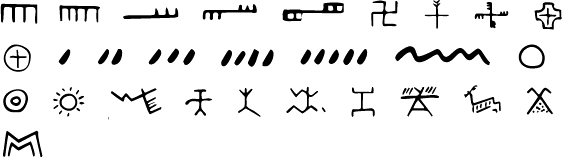
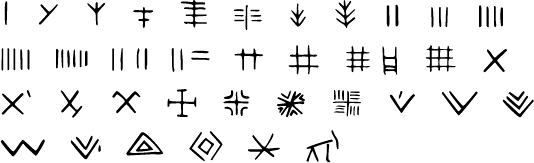
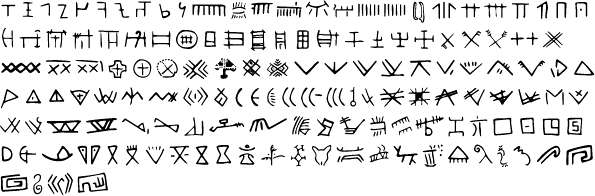
Font created by Sorin Paliga of the Department of Slavic Languages and Literature at the University of Bucharest, Romania
Download Vinča font (TrueType, 55K)
Information about this script
http://en.wikipedia.org/wiki/Danube_script
http://www.prehistory.it/ftp/winn.htm
Linear A, Indus/Harappa script, Phaistos Disc script, Proto-Elamite, Old Elamite, Rongo Rongo, Vinča script
Page last modified: 23.04.21
[top]

Note: all links on this site to Amazon.com


You can support this site by Buying Me A Coffee, via PayPal or Patreon, or by contributing in other ways.
If you find all the adverts annoying, there is now an Ad-free version of Omniglot which you can access for a small monthly or annual donation.

This website and its content is copyright of Simon Ager - © Simon Ager 1998-2026. All rights reserved. All images were created by me, unless otherwise indicated. More details

[top]


