
Bassa is a member of the Western Kru branch of the Niger-Congo language family. It is spoken mainly in cenral Liberia, and also in western Sierra Leone, by about 740,300 people (in 2020). In Liberia Bassa is spoken by about 733,000 people in the counties of Grand Bassa, Margibi, Bong and Montserrado. In Sierra Leone there are about 7,300 speakers of Bassa mainly in Freetown in the Western Area Urban District of the Western Area Province.
Bassa is usually written with the Latin alphabet. Several spelling systems were created during the 20th century by missionaries and the Liberian Ministry of Education. The one shown below was developed in the 1960s by a missionary called June Hobley and was based on an orthography devised by the Rev. Percy E. Clubine in the 1930s. It has been used to print numerous works of Christian literature. The Bassa Vah script is also used to some extent, particularly by older men.
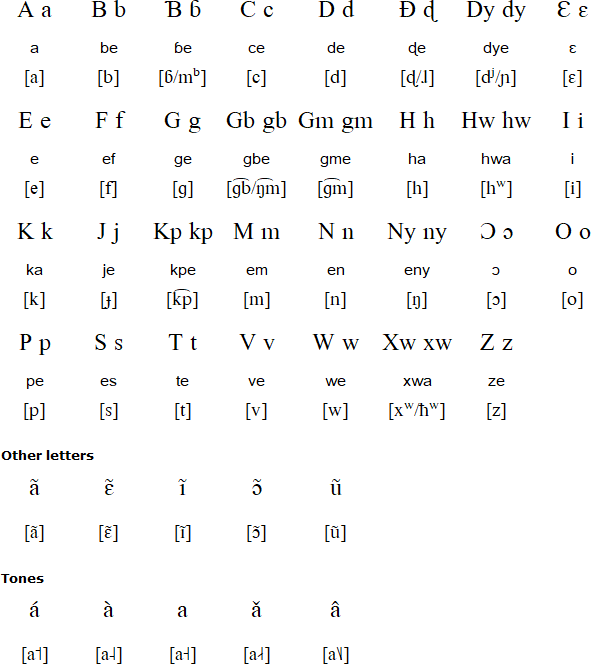
Download alphabet charts for Bassa (Excel)
Ɖé nì-díɖí kè ɓɛ̀ɖɛ̀ìn-dyí múɛ, ɖéɛ̀ nyɔǔn-dyù séín wóɖóɛ ɓɛ́ìn wɔ̃. Ké wa ɓéɖé hwìɖìi poìn hwòɖò-dyùà kè ɖɛ múin wɔ̃́-wɔ̃́ sɔ̀ɛ̀ìn ɖé dyɔún, ké wa ɓéɖé ɓɛ́ waà nyuɖɛ̀ ké gbo muìn ɓó ɖíí kà.
Sample text by Peter Gorwor from Liberia
All human beings are born free and equal in dignity and rights. They
are endowed with reason and conscience and should act towards one another in a spirit of brotherhood.
(Article 1 of the Universal Declaration of Human Rights)
Information about Bassa | Phrases | Numbers | Tower of Babel
Information about Bassa
http://en.wikipedia.org/wiki/Bassa_language
https://www.ethnologue.com/language/bsq
http://gwek.tripod.com/Bassa_Studies
https://cefliberia.org/bassa-resources-and-orthography/
Online Bassa dictionary
http://cefliberia.org/extras/Bassa%20Dictionary.htm
Bassa, Bete (Daloa), Godié, Guere, Jabo, Neyo, Nyabwa, Wobé, Yocoboué Dida
Languages written with the Latin alphabet
Page last modified: 14.05.21
[top]

Note: all links on this site to Amazon.com


You can support this site by Buying Me A Coffee, via PayPal or Patreon, or by contributing in other ways.
If you find all the adverts annoying, there is now an Ad-free version of Omniglot which you can access for a small monthly or annual donation.

This website and its content is copyright of Simon Ager - © Simon Ager 1998-2026. All rights reserved. All images were created by me, unless otherwise indicated. Feel free to use them for personal, educational or non-commercial purposes, and don't forget to mention where they came from. More details about copyright

[top]


