

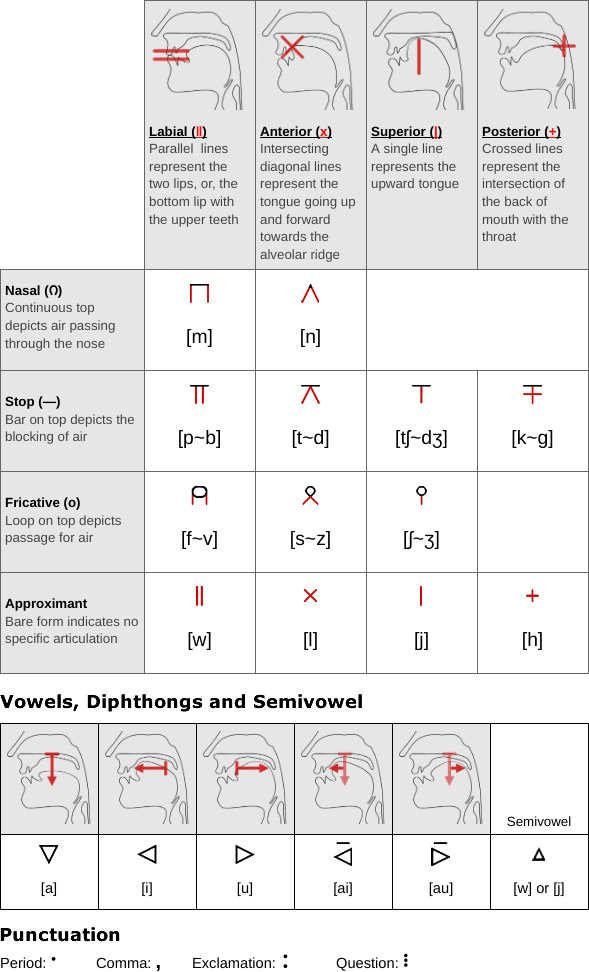
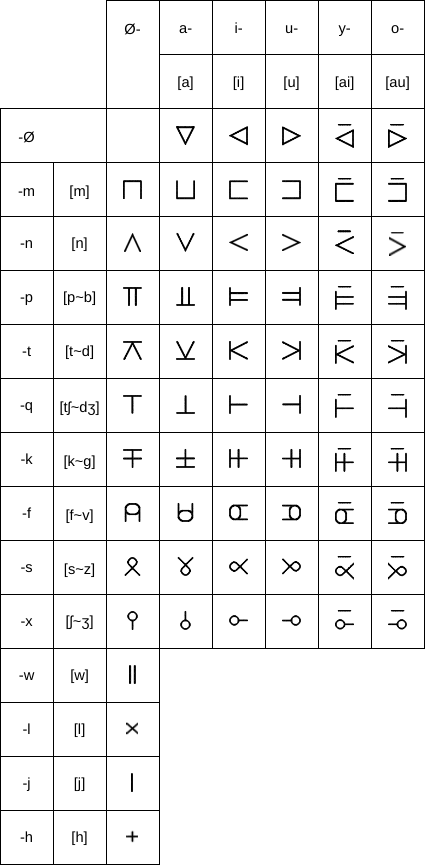
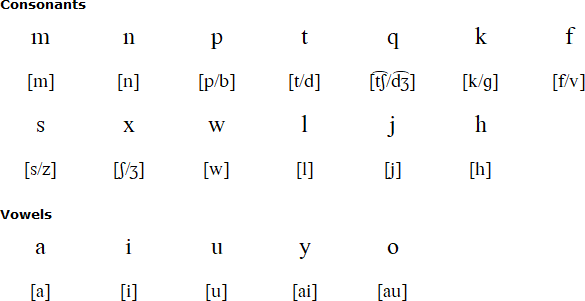
The Wiqa ([ˈwi:tʃʌ]) script was created in 2023 by Scott Printz to write his conlang of the same name. It was inspired by Hangul, Canadian Aboriginal Syllabics and human speech anatomy.
Wiqa is unusual in how it divides syllables. Unlike most abugidas, in which consonant-vowel units represent consonants followed by vowels (CV), Wiqa symbols represent a vowel preceding a consonant (VC). This feature is ideally suited for the polysynthetic Wiqa language as most morphemes begin with a vowel and end with a consonant. This unusual onset-rime arrangement is shared with the Khom and Zhuyin Fuhao scripts.

wiqa sumihjupa ytu, akika usula koqinuskwistax.
Though they don't share words, the chicken and the fox understand each other.
Constructed scripts for: Ainu | Arabic | Chinese languages | Dutch | English | French | Hawaiian | Hungarian | Japanese | Kadazandusun | Korean | Lingala | Malay & Indonesian | Persian | Tagalog / Filipino | Russian | Sanskrit | Spanish | Taino | Turkish | Vietnamese | Welsh | Other natural languages | Colour-based scripts | Tactile scripts | Phonetic/universal scripts | Constructed scripts for constructed languages | Adaptations of existing alphabets | Fictional alphabets | Magical alphabets | A-Z index | How to submit a constructed script
[top]

Note: all links on this site to Amazon.com


You can support this site by Buying Me A Coffee, via PayPal or Patreon, or by contributing in other ways.
If you find all the adverts annoying, there is now an Ad-free version of Omniglot which you can access for a small monthly or annual donation.

This website and its content is copyright of Simon Ager - © Simon Ager 1998-2026. All rights reserved. All images were created by me, unless otherwise indicated. More details

[top]


