Yesterday while preparing the latest episode of the Radio Omniglot podcast, which is about Dutch, I found that there are quite a few words of Dutch origin in English.
Some come directly from Dutch, some via other languages, such as French, and some come via Dutch from other languages.
- avast – from the Dutch hou vast (hold tight)
- bluff – probably from the Dutch bluffen (to brag)
- booze – from the Middle Dutch busen (to drink to excess)
- brandy – from the Dutch brandewijn (“burnt wine”).
- cookie – from the Dutch koekje (little cake)
- easel – from the Dutch (schilders)ezel (“painter’s donkey”)
- iceburg – from the Dutch ijsberg (“ice mountain”)
- knapsack – from the Middle Dutch knapzak (“snack bag”)
- bamboo – from the Dutch bamboe, from the Portuguese bambu, from the Malay bambu, from the Kannada ಬಮ್ಬು (bambu)
- cricket (the insect) – from the Middle English creket/crykett/crykette, from the Old French crequet/criquet (locust) from criquer (to make a cracking sound; creak), from the Middle Dutch kricken (to creak, crack)
- cricket (the game) – perhaps from a Flemish dialect of Dutch met de krik ketsen (to chase a ball with a curved stick)
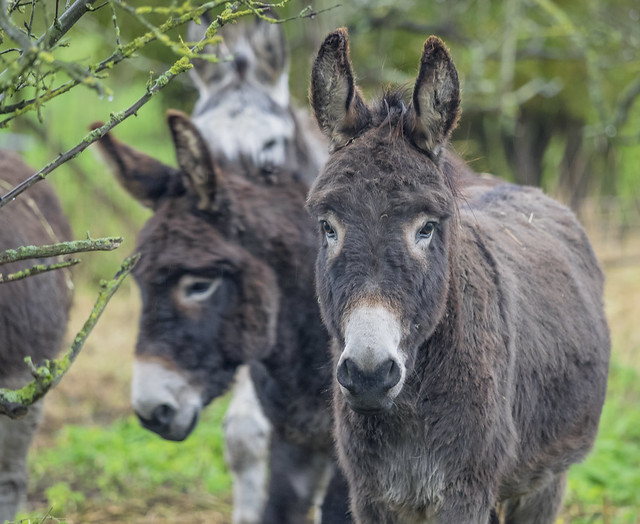
I particularly like schildersezel, or “painter’s donkey”, for an easel. It’s perhaps a relative of the clothes horse, which is also known as a drying horse or garment donkey, apparently.
The word ezel means donkey, ass, mule, fool, idiot, easel, (work)bench or trestle. Related words include:
- ezelin = jenny, she-ass
- ezelsveulen = foal of a donkey; utter idiot, hopeless fool
- ezelachtig = asinine
- ezeldrijver = donkey-driver
- ezelsbruggetje = memory aid, mnemonic (“little donkey bridge”)
- ezelsoor = dog-ear (turned down part of a page – “donkey’s ear”)
Here’s a tune I wrote called The Dancing Donkeys / Asynnod sy’n Dawnsio: