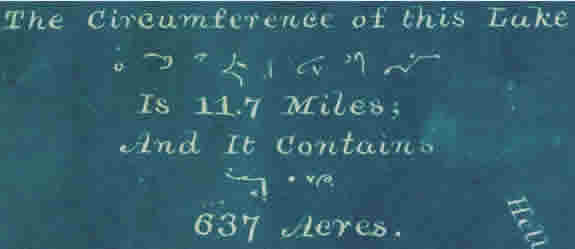
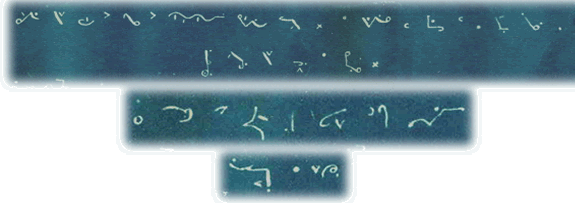
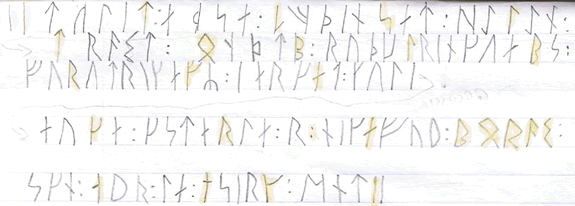
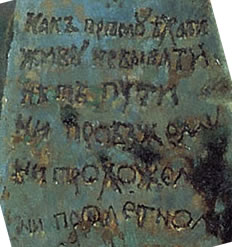
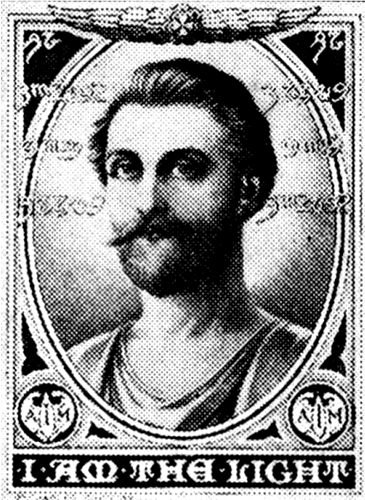
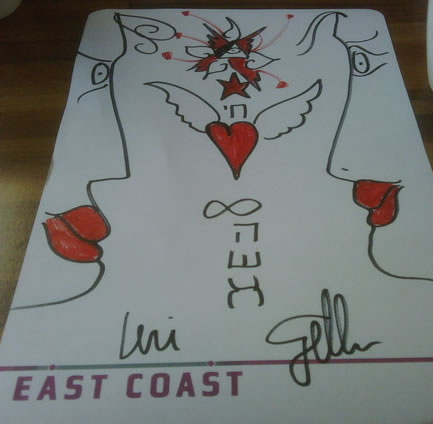
Can anyone decipher the writing on this image, which was sent in by a visitor to Omniglot.

It looks like Hebrew to me.
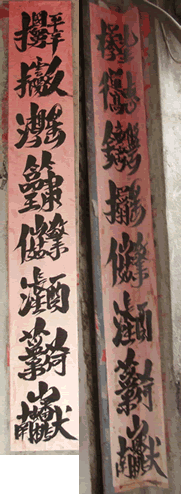
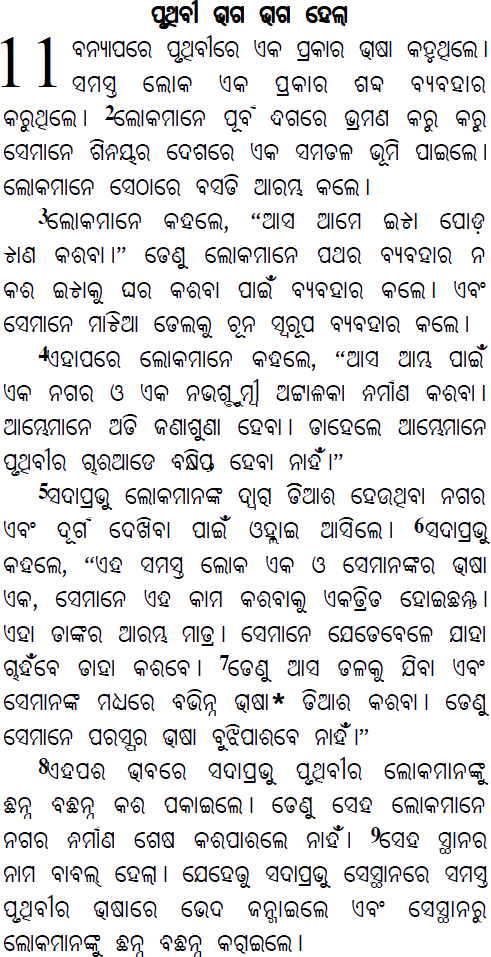
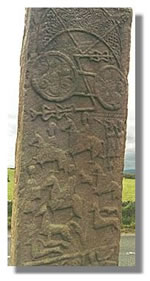
Can anybody decipher the inscriptions below? The image was sent in by a visitor to Omniglot and comes from an old Turkish book. More images can be seen here.

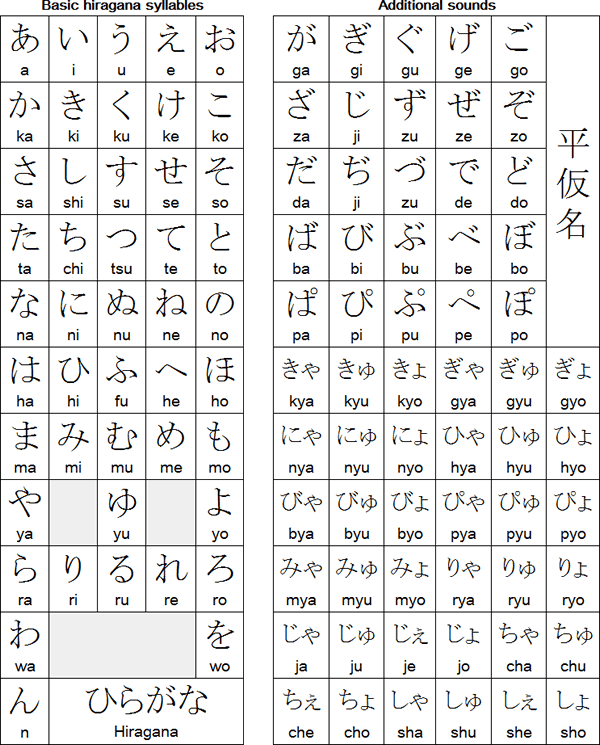
The other day I came across a useful site that helps you learn various alphabets and other writing systems – Henrik Theiling’s Script Teacher. It includes tests on CJK radicals, Hiragana, Katakana, Bopomofo, Hangul, Greek, Cyrillic, Arabic, Armenian, Hebrew, Georgian, a number of constructed scripts, and even a Blackletter (Gothic) typeface.
Other writing-related sites I found recently include the ambigram magazine, which includes a gallery of ambigrams, an ambigram generator and other ambigram-related information; and an ambigram generator.
An ambigram is “typographical creation that presents two or more separate words within the same physical space.” (source). Some ambigrams present the same word when read both ways up, or from left to right and right to left.
Here are some examples of ambigrams:

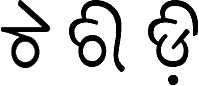
This says Thank you and comes from this site.
This is a biscriptal one:

It reads Sameh – سامح in the Latin and Arabic alphabets and comes from this site.
There are other examples of bilingual / biscriptal ambigrams on Chinese-English Ambigrams and on Inversions.
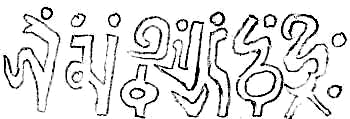
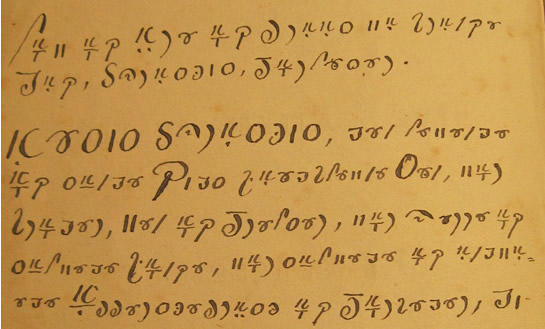
Here’s some mysterious writing from a napkin ring.

Can any of you identify the script or decipher it?
This writing comes from a puzzle that appeared in the Puzzle Museum in 2005 and since then no-one has been able to identify the script or decipher it.
Some of the letters look like Thai or Lao, while others look like Tagalog to me.
The person who sent in the puzzle thinks the writing might be in a magical alphabet like the ones here.
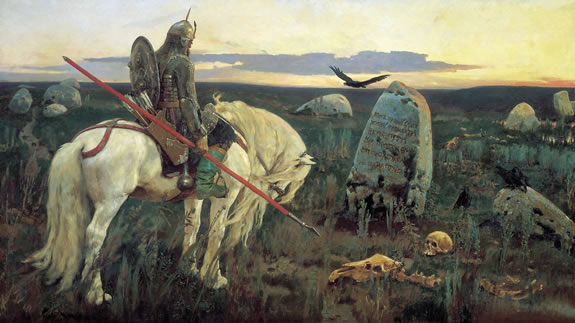
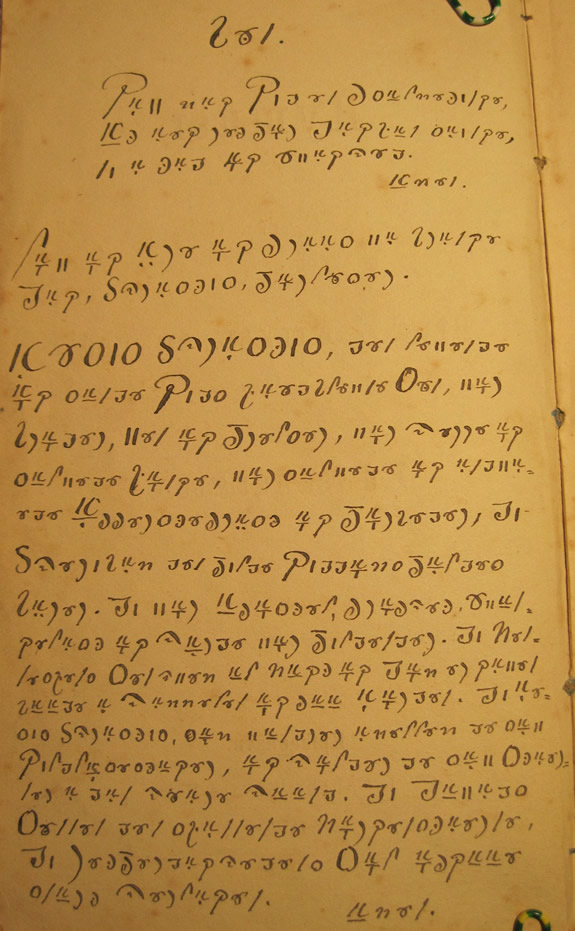
This mysterious inscription was sent in by an editor at the Arizona Republic newspaper in Phoenix, Arizona. One of their reporters is working on a story about a book that was donated to a local library there. It’s a portfolio of prints apparently related to the Hermitage Museum in Leningrad that was compiled for the 1939 World’s Fair.
The inscription below is on the flyleaf, and they’ve been trying to determine what language it’s in in the hopes of getting it translated.

The writing appears to be in a cursive form of the Hebrew script, and the language might be Hebrew or Yiddish.