Trees, Wood(s) & Forests

Words for tree, wood and related things in Celtic languages.

There are various words for tree in the modern Celtic languages. In each language the usual word for tree is different and comes from different roots. Only the Cornish and Breton words are cognate. The usual words for tree are: crann (Irish), craobh (Scottish Gaelic), billey (Manx), coeden (Welsh), gwedhen (Cornish) and gwezenn (Breton).

Here be trees!

Proto-Celtic *kʷresnom = tree, wood
Old Irish (Goídelc) crann = tree
crannchor = casting of lots
crannda = wooden
Middle Irish (Gaoidhealg) crann, crand = tree, wood, timber, staff, pole, plank, beam, spearshaft, mast, steering oar, lot, destiny, fate
crannach, cranncha = trees, grove, wooded place
crannaige, crannaigi = shaft-trimmer, spearsman
crannaigid = to cast lots
crannán = small spearshaft
crannchor, crannchur = casting of lots
crannda, cranda = wooden, made of wood, wooded
cranngal, crannghal = timber, wooden structure or object, spear (shaft)
crannóc, crandoc = wooden structure, wooden drinking-container; basket, wooden lake-dwelling
cranntáball = sling, staff-sling
Irish (Gaeilge) crann [kɾˠaun̪ˠ / kɾˠan̪ˠ] = tree; mast, boom, pole; stock, handle; shaft, beam; stick
crannach = stake-fence, forest of spears, arboreal, wooded
crannadóir = arboriculturist, tree-climber
crannadóireacht = arboriculture, tree-climbing
crannail = timbering, timbers, lattice-work, ship’s masts
crannán = wooden shaft, handle, wooden vessel, hardening stand (for bread)
crannchur = casting of lots, sweepstake, lottery
crannlach = brushwood, (withered) stalks, haulm
crannmhar = full of trees, timbered, wooded
crannóg = piece of wood, pole, wooden frame
crannúil = tree-like, arborescent
Scottish Gaelic (Gàidhlig) crann [kraun̪ˠ] = mast; plough; beam; lot (in drawing lots); tree (archaic)
cranntair = wooden peg/pin
crannghail = wooden frame
crannach = pertaining to or abounding in masts, ploughs, beams, trees etc
crannchur = destiny, lot, draw, lottery
crannag = pulpit, crannog, island dun, crosstree
crannlach = brushwood, lanky wood, dummy
Manx (Gaelg) croan = boom, mast, flag pole
creenagh = brushwood, wither
crannag = dock, heap, desk, pulpit, rostrum, lookout
Gaulish prenne = big tree
Proto-Brythonic prenn [ˈprenː] = wood, tree
Middle Welsh (Kymraec) pren, prenn = tree, bush, timber, wood
prenvol, prenuol, prennol = (wooden) box, chest, coffer
Welsh (Cymraeg) pren [prɛn] = tree, bush, shrub; timber, wood, wooden; piece of wood, wooden stick; cross, gallows, gibbet
prenfol = (wooden) box, chest, coffer, case, coffin
preniaf, prennaf, prenio, prennu = to bolt (a door), bar, shut (sb) out
prensaer = carpenter
Old Cornish pren = wood
Middle Cornish (Cernewec) pren = tree, wood, timber, a piece of wood, a lot
prenic = wooden, woody
prenne = to fasten with a piece of wood, to bar
prennyer = pieces of wood
Cornish (Kernewek) prenn [prɛn:] = bar, beam, log, timber, (gambling) lot , wooden
prenna, predna = to bar, lock
prennek = wooden, woody
prennlown = plywood
prennweyth = woodwork
Old Breton pren = wood
Middle Breton (Brezonec) pren, prenn, preen = wood
prennaff, prena, prenna = to close, block
prennet = to lock
Breton (Brezhoneg) prenn = wood, piece of wood, fastner
prennañ = to close, fasten, shut

Etymology: from Proto-Indo-European *kʷres (bush, thicket) [source]. Words from the same roots include hurst (wood, grove – used in placenames, e.g. Lyndhurst) in English, and Horst (eyrie, bush, thicket, small forest) in German [source]

Old Irish (Goídelc) cráeb / cróeb = tree
Middle Irish (Gaoidhealg) cráeb, craib = branch, bough, sprig, rod, wand, post, tree, bush
cráebach, cræbacha = having branches, branchy, branches
Irish (Gaeilge) craobh = branch, bough; tree
craobhach = branches, branched, branching, flowing, spreading
craobhaigh = to branch, ramify, expand, spread
craobhóg = small branch, twig, sprig, spray, darling
Scottish Gaelic (Gàidhlig) craobh [krɯːv] = tree, bush
craobhaich = woody, wooded, full of trees, branching, spreading
craobhag [krɯːvag] = small tree
craobhadair [krɯːvədɪrʲ] = arborist, tree specialist
Manx (Gaelg) crouw = stock, bush, dwarf tree, stick, bunch, wide spreading tree, tributary of river

Etymology: unknown, possibly from Proto-Celtic krētros (sieve) [source].

Proto-Celtic *belyom = tree
Gaulish *bilia [ˈbi.liaː] = tall tree
Old Irish (Goídelc) bile [ˈbʲilʲe] = tree, especially a large, ancient, sacred one
Middle Irish (Gaoidhealg) bile [ˈbʲilʲe] = (large) tree (esp. an ancient and venerated one), tree trunk, mast, scion, hero
bilech = abounding in trees, (well-)wooded
bileóc, biléog = leaf, leaflet
Irish (Gaeilge) bile [ˈbʲɪlʲə] = (large, sacred) tree; scion; distinguished person
bileog = leaf, letter of freedom (to marry)
bileogach = leafy, laminated
biliúil = tree-like, stately
Scottish Gaelic (Gàidhlig) bile [bilə] = mast; plough; beam; lot (in drawing lots); tree (archaic); cluster of trees, sacred tree/grove
bileach = leaf, amount of leaves, leafy tree
bileag = blade (of vegetation), board, leaf, leaflet, pamphlet, ticket, label, slip (of paper)
bileagach = lipped, billed, bladed, fringed, edged
Manx (Gaelg) billey = tree, big bush
billagh = tree, wooded, woody
biljagh = arboreal, wooded
billey
Middle Welsh (Kymraec) bill, pill = (tree) trunk, stock, log, branch; fortress
billwydd = kindling, firewood, sticks, brushwood; joists, laths
Welsh (Cymraeg) pill [pɪɬ] = (tree) trunk, stock, log, branch, pole, stake, post; fortress, castle, stronghold, refuge, sanctuary, safety, strength, force; snatch of song, verse; still, crib; socket
pillwydd = kindling, firewood, sticks, brushwood; joists, laths
pillyn = peg
Middle Breton (Brezonec) bilh, bill = a felled tree trunk, log, lumber, timber
bilh-koad = chunk of wood
Breton (Brezhoneg) bill = trunk

Etymology: from Proto-Indo-European *bʰolh₃yo- (leaf), from *bʰleh₃- (blossom, flower) [source]. Words from the same Proto-Celtic root, via Gaulish, include bille (tree trunk, railway sleeper, rolling pin) and billon (a ridge in a ploughed field) in French, bilha (stem, trunk) in Provençal and possibly billa (spigot, faucet, stick) in Galician [source].

Words from the same PIE roots include folio and phyllo / fil(l)o (pastry), phyllomancy (diviniation by leaves) in English, feuille (leaf, sheet) in French, andhoja (leaf, petal, blade) in Spanish [source].

Proto-Celtic *widus = wood, trees
Old Irish (Goídelc) fid = tree, wood, letter in Ogham
fidchell = a boardgame similar to chess
fidrad = trees, a wood
Middle Irish (Gaoidhealg) fid = tree, wood, timber
fidach = wooded, abounding in trees, timber
fidchell = a boardgame similar to chess
fidrad = trees, a wood, letter (in Oghan)
Irish (Gaeilge) fiodh = tree, wood, timber
fiodhach = abounding in trees, wooded
fiodhneimheadh = sacred grove
fiodhradh = trees, timbers, letters (literary)
ficheall = chess, chess board
Scottish Gaelic (Gàidhlig) fiodh [fjɤɣ] = wood, timber, wooden, made of wood
fidhcheall = Celtic chess
fiodhach [fjɤɣəx] = shrubbery, shrubs, cheese press; wooden, ligneous, woody
fiodhan = cheese press
fiodhrach [fjɤɣan] = timber
Manx (Gaelg) fuygh = timber, wood
fuyghagh, fuyghoil = ligneous, wooden, woody
fuyghee = wooden
feeal = chess
Proto-Brythonic *gwɨð [ˈɡwɨːð] = wood, trees
Old Welsh guid = tree
Middle Welsh (Kymraec) guit, guyt, gwyd, gwŷdd = tree(s), forest, woods
gvytbuil, gvydbvll = a chess-like boardgame
guduit, gwyddfid, gwytuid, gwituid = wood, forest, bush, protective hedge
Welsh (Cymraeg) gwŷdd [ɡwɨːð / ɡwiːð] = tree(s), branches, twigs; forest, woods, shrub(s); lineage, genealogical tree, stock; stem
gwyddallt = wooded slope
gwyddbwyll = chess; knowledge, learning, science, reason
gwyddel = forest, grove, thicket, brake, wilderness
gwyddfid = wood, forest, bush, protective hedge
Old Cornish guit = trees
Middle Cornish (Cernewec) gwedh, gweydh, gwydh = trees
gwedhen, gwedhan = tree
gwydhbol = chess
Cornish (Kernewek) gwydh [gwɪ:ð] = trees
gwedhen = tree
gwedhek = woodland
gwedhlan = arboretum, tree plantation
Old Breton guid = trees
Middle Breton (Brezonec) guez, guid, gwyd, gwydh = tree(s)
Breton (Brezhoneg) gwez [ɡwe] = trees
gwezenn = tree
gwezeg = wooded
gwezek = abounding in trees
gwezboell = chess

Etymology: from Proto-Indo-European *h₁weydʰh₁-. (tree, beam) [source]. Words from the same roots include wood in English, vid (firewood, wood) in Swedish, and ved (wood) in Danish [source].

Proto-Celtic *kaitos = wood, forest
Proto-Brythonic *koɨd [ˈkoɨ̯d] = wood, forest
*argoɨd = surrounding forest
Old Welsh coit = wood, forest
coetlann = copse, grove, woodland, wooded glade
Middle Welsh (Kymraec) coyt, coit, koet, coet, coed = forest, wood, trees
coedallt = wooded slope, hillside
coedva, koedfa = grove, woodland, forest
koedach = shrubs, brushwood
coydiawc, coedawc, coedoc = woody, wooded
coydiawl, koedolyon = silvan, rustic, wild
coet, coedwig, coedwic = forest, wood
Welsh (Cymraeg) coed [koːɨ̯d / kɔi̯d] = forest, wood, trees; shrubs; timber, pieces of wood
coeden [koːɨ̯d / kɔi̯d] = tree
coedaidd = silvan, arboraceous, woody, wooden
coedallt = wooded slope, hillside
coedfa = grove, woodland, forest
coed(i)ach = shrubs, brushwood, underwood, withered branches
coed(i)af), coed(i)o = to prop or timber a pit or shaft
coed(i)og = woody, wooded, abounding with trees, silvan
coed(i)ol = pertaining to wood or timber, silvan, rustic, wild
coedlan = copse, grove, woodland, wooded glade
coedwig = forest, wood
argoed = trees, forest, surrounding forest
Old Cornish cuit = wood, forest
Middle Cornish (Cernewec) coys, coyd, coid = wood, forest
Cornish (Kernewek) koos [ko:z / ku:z] = forest
Middle Breton (Brezonec) coat, coet, coët = wood, forest
Breton (Brezhoneg) koad [ˈkwɑːt] = wood, forest
koadadur = afforestation, tree planting
koadaj = panelling, woodwork
koadeg = wooded, woody
koader = to timber, panel, plant trees
argoad = groove, copse, wooded

Etymology: from Proto-Indo-European *kayt-/*ḱayt- (forest, wasteland, pasture) [source]. Words from the same roots include heath and heather in English, Heide (heath, heathland, woodland, forest) in German, hed (moor, waste land) in Swedish.

Sources: Wiktionary, Am Faclair Beag, Online Manx Dictionary, Teanglann.ie, eDIL – Electronic Dictionary of the Irish Language, In Dúil Bélrai English – Old Irish glossary, Geiriadur Prifysgol Cymru, Gerlyver Kernewek, Dictionaire Favereau, TermOfis, English – ProtoCeltic WordList (PDF), Etymological Dictionary Of Proto Celtic


728×90 (Best VPN)

Thick

Words for thick and related things in Celtic languages.

Thick & Thin

Words marked with a * are reconstructions.

Proto-Celtic *tegus = thick
Old Irish (Goídelc) tiug [tʲiu̯ɣ] = thick, dense
tiget = thickness
Middle Irish (Gaoidhealg) tiug = thick, dense, solid, density, press, crowd
tiugaigid = to thicken
Irish (Gaeilge) tiú = thick, dense
tiubh [tʲuː / tʲʊ(w)] = thick, dense, closely set; fast
tiubhaigh = to thicken, conventrate
tiúchan = concentration
Scottish Gaelic (Gàidhlig) tiugh [tʲu] = thick; stout, portly, buxom; fat, viscous (paint); frequent
strong>tiughachadh [tʲu.əxəɣ] = (act of) thickening, squeezing
strong>tiughad(as) [tʲu.əd(əs)] = thickness
strong>tiughaich [tʲu.ɪç] = thicken, squeeze
strong>tiughalach [tʲu.əl̪ˠəx] = dregs
Manx (Gaelg) chiu = stout, thick, heavy, blubber, thick-set ( hedge), strong (solution), whipped (cream), intense; foggy, turbid
cheeid = thickness, density, grossness
chiughey = to become heavy, to clot, to concentrate, to congeal, to thicken
Proto-Brythonic *teɣ = thick
Old Welsh teu = thick
Middle Welsh (Kymraec) tew, teỽ, tev = thick, strong, sturdy, deep
teỽder, tewder thickness, depth, density, fatness
tewet, tewhet, teỽet = thickness, depth, fat
tewhau, tevhau = to make or become fat, to fatten, to thicken, to congeal
Welsh (Cymraeg) tew [teːu̯ / tɛu̯] = thick; made of thick cloth; strong, sturdy, powerful; deep
tewder thickness, depth, density, fatness, corpulence, obesity, hardness (of hearing)
tewed = thickness, depth, fat
tewhad = fattening, thickening, coagulation, condensation
tewhau = to make or become fat, to fatten, to thicken, to congeal
Middle Cornish (Cernewec) tew = thick, gross, fat, foggy
tewder = thickness, grossness, fatness
tewraga = to thicken
Cornish (Kernewek) tew [tɛˑʊ] = fat, bulky, dense, thick, chubby
tewder = bulk, consistency, density, thickness
tewhe = to thicken, fatten
Middle Breton teu, teo = thick, fat, big
teuhat = to thicken, grow
teuder, teoder = thickness, size
Breton (Brezhoneg) tev [ˈtew] = thick, fat, big, obese, opaque
tevaat {teˈvɑːt] = to thicken, grow
tevded [ˈtew.det] = thickness, size
tevder [ˈtew.dɛr] = thickness, size
tevdur = thickening, enlargment, coagulation

Etymology: from Proto-Indo-European *tégus (thick), from *teg- (to cover) [source]. Words from the same roots include thick, protect, thatch, thug and tile in English, dik (thick, fat, cool, nice) in Dutch, dick (thick, fat) in German, tjock (thick, fat) in Swedish, tykky (thick snow or rime on trees) in Finnish, and deahkki (muscle) in Northern Sami [source].

Proto-Celtic *remros = fat, thick
Old Irish (Goídelc) remor [ˈr͈ʲeβ̃or] = fat, stout, thick
Middle Irish (Gaoidhealg) remor, reamur, remar = stout, thick, bulky, corpulent
remraigid = to thicken, fatten, make stout
Irish (Gaeilge) ramhar [ɾˠauɾˠ / ˈɾˠãuəɾˠ] = fat, thick
ramharaigh = to fatten, thicken, batter, stupefy
ramharú = fattening, coagulation, fulling, dulling stupefying, beating
Scottish Gaelic (Gàidhlig) reamhar [r̪ˠãũ.ər] = fat, plump, meaty, fleshy
reamhrachd [r̪ˠɛ͂ũrəxg] = fatness, state of being overweight
ro-reamhar = obese
Manx (Gaelg) roauyr = fat, thick, stout, gross, bulky, plump, overweight
roauyragh = fattening, fatness, fat person
roauyraghey = to fatten, to thicken, to gain weight, fattening, thickening
roauyrey = fat
Proto-Brythonic *rreβ̃ = (?)
Middle Welsh (Kymraec) ref = thick, stout, great, large
Welsh (Cymraeg) rhef = thick, stout, great, large, bundle
rhefder = thickness, stoutness, girth

Etymology: unknown [source].

Sources: Wiktionary, Etymological Dictionary Of Proto Celtic, In Dúil Bélrai English – Old Irish glossary, eDIL – Electronic Dictionary of the Irish Language, Teanglann.ie, Am Faclair Beag, An etymological dictionary of the Gaelic language, Fockleyreen: Manx – English Dictionary, Online Manx Dictionary, Gaelg Corpus, Geiriadur Prifysgol Cymru, Lexicon cornu-britannicum : a dictionary of the ancient Celtic language of Cornwall, Gerlyver Kernewek, Devri : Le dictionaire diachronique du breton, Geriafurch, TermOfis


Blue / Green / Grey

Words for blue, green, grey and related things in Celtic languages.

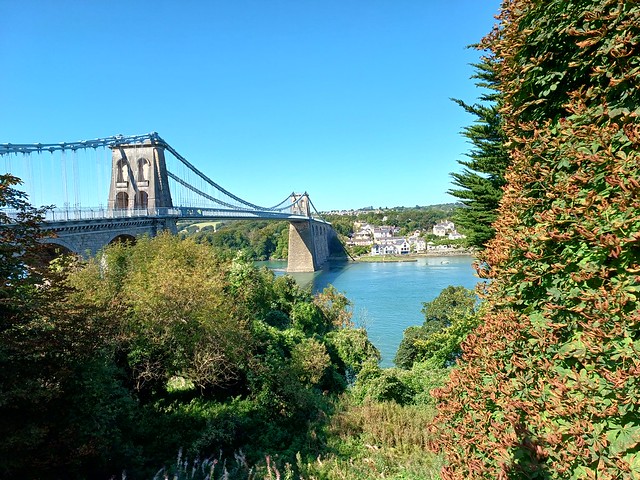
Pont y Borth / Menai Bridge

Words marked with a * are reconstructions.

Proto-Celtic *glastos = green, blue
Gaulish *glastom = green, blue
Old Irish (Goídelc) glas [ɡlas] = green, greenish (esp of growing things); blue, green-blue, grey-blue; metallic (colour); ice/frost colour; grey; wan (complexion); bluish, livid, discolored; faded
Middle Irish (Gaoidhealg) glas = green, greenish (esp of growing things), blue, greenish blue, greyish blue, wan (complexion), livid, discoloured, faded (of garments)
glasaid = to grow pale or livid, to become yellow, to make green
glase = greenness, blueness, steel-colour
Irish (Gaeilge) glas [ɡlˠasˠ] = green (grass, politics), grey (horses, cloth, eyes), blue, pale, pallid, immature, unseasoned, raw inexperienced
glasaigh = to become green, sickly, grey, raw or chill, to make green
glasra = green, garden, stuff, vegetable, vegetation
glasrachán = pale, sickly-looking, person.
glasta = shiny, glossy
Scottish Gaelic (Gàidhlig) glas [gl̪ˠas] = grey-green, pale, wan, sallow, green, unripe
glasadh, glasachadh = greying, dawning
glasail [gl̪ˠasal] = greyish, pale, wan
glasraich [ɡl̪ˠasrɪç] = vegetable(s), greens
glasraichear [ɡl̪ˠasrɪçər] = vegeratian
Manx (Gaelg) glass = green (of nature), verdant, soft, pale, pasty, ashen (colour), grey (of animal), raw, unfledged, sappy, callow (of youth)
glassrey = vegetable, to vegetate
glassoil = greenish
glassaghey = greying, pale
Proto-Brythonic *glas = green, blue
Middle Welsh (Kymraec) glas, glâs = blue, greenish blue, sea-green
glasu, glassu = to (turn) pale, turn grey, burnish, polish
glasỽellt, glaswellt = grass, green grass or pasture
glaswyn, glaswen = light blue, pale blue
Welsh (Cymraeg) glas [ɡlaːs] = blue, azure, sky-blue, greenish blue, sea-green, green, grass-coloured, bluish green, verdant, unripe (of fruit), greyish-blue, slate-coloured, livid, pallid, pale, grey, silver
glasaf, glasu = to (turn) pale, turn grey, burnish, polish
glasddu = dark blue, deep blue, violet
glasgoch = blue tinged with red, purple, violet, puce
glaswellt = grass, green grass pr pasture
glaswelltir = glassland, pasture
glaswyn = light blue, pale blue
Middle Cornish (Cernewec) glas, glâs = blue, azure, sky coloured, gray, ash coloured, verdant, green
glase = to become blue, to grow pale, to be green, to flourish
glasygyon = a green, green plot
Cornish (Kernewek) glas [ɡla:z /ɡlæ:z] = blue, green, grey, sea colour
glasdu = dark blue
glasik = blueish
glasneth = vegetation, uncultivated land
glasrudh = blueish purple, purple, violet
glaswr, glaswyrdh = sea green, turquiose
glaswyn = light blue, sky blue
Middle Breton (Brezonec) glas = blue, green, azure
Breton (Brezhoneg) glas/glaz [ɡlɑːs] = blue, green (nature), grey (horse), raw & salty, fresh, bitter, pale
glasaat = to green, freshen up
glasded = greenness
glasdu = dark blue
glasvez = greenery
glaswenn = light blue
Etymology: from Proto-Indo-European *ǵʰl̥h₃stós, from *ǵʰelh₃- (to flourish, green, yellow) [source]. Words from the same roots include chlorine, gall, gild, glow, gold, yellow in English, gul (yellow) in Danish, Norwegian and Swedish, and words for clean and pure and words for white, bright and fawn in Celtic languages [source].

The Fastest Way to Learn Japanese Guaranteed with JapanesePod101.com

Sources: Wiktionary, Am Faclair Beag, Online Manx Dictionary, Teanglann.ie, eDIL – Electronic Dictionary of the Irish Language, In Dúil Bélrai English – Old Irish glossary, Geiriadur Prifysgol Cymru, Gerlyver Kernewek, Dictionaire Favereau, TermOfis, English – ProtoCeltic WordList (PDF), Etymological Dictionary Of Proto Celtic

Unlimited Web Hosting - Kualo

Happy & fortunate

Words for happy, forunate and related things in Celtic languages.

have a happy weekend!

Words marked with a * are reconstructions.

Proto-Celtic *sognāwos = well-grown
Old Irish (Goídelc) sona [ˈsona] = happy, fortunate
sonaide = prosperous, fortunate, happy, lucky
Middle Irish (Gaoidhealg) sona = prosperous, fortunate, lucky
sonaide = prosperous, fortunate, happy, lucky
sonaige = happiness
sonann = properous land
Irish (Gaeilge) sona [ˈsˠʊn̪ˠə] = happy, lucky, fortunate
sonaídeach = easy, untroubled
sonas = happiness, good luck, good fortune
sonasach = happy, lucky, fortunate
Scottish Gaelic (Gàidhlig) sona [sɔnə] = content, happy
sonas [sɔnəs] = happiness, contentment
Manx (Gaelg) sonney = affluent, lucky, fortunate, happy

Etymology: from Proto-European *ǵneh₃- (to recognise, know) [source]. Words from the same root include gnomon (a pointer on a sundail), ignore, noble, normal, glory in English, the Irish word gnúis (face) in Irish, gnùis (face) in Scottish Gaelic, and gnis (jaw, chin, face) in Welsh [source].

Proto-Celtic *lowenos = merry, joyful
Gaulish *Lawenos = name
Proto-Brythonic *llowen = happy
Middle Welsh (Kymraec) llauen, llewyn, llawen = merry, jovial, glad, cheerful, happy
llawena, llawenu = to make happy, gladden, cheer, delight
llawenhau, llywenhav, lawenhäu = to rejoice, be/make joyful
Welsh (Cymraeg) llawen [ˈɬau̯ɛn / ˈɬau̯an] = merry, jovial, glad, cheerful, happy, blithe, joyful, joyous, jubilant; bringing happiness, pleasant, delightful
llawenaf, llawenau = to make happy, gladden, cheer, delight
llawenaidd = glad, cheerful, happy, pleasant, delightful
llawender = gladness, happiness, joy
llawenhaf, llawenhau = to rejoice, be joyful, be/make glad, be joyous, exult, be cheerful, gladden, cheer (up), hearten
llawenol = glad, cheerful, happy, jubilant
Old Cornish louen = happy
Middle Cornish (Cernewec) lowen = glad, joyful, merry
loweneder = joy, mirth
lowene, lowené = joy, bliss, gladness, mirth
lowenec, lowenek = glad, joyful, merry
lowenhe, lowenhé = to cause, rejoice, make/be glad, gladden, comfort
Cornish (Kernewek) lowen [‘lɔwɛn / ‘lu:ɐn] = glad, happy
lowenek [lɔ’wɛnɛk / lə’wɛnɐk] = cheerful, gay, happy, joyful, merry
lowena = bliss, cheer, happiness, joy
lowender = mirth
lowenek = cheerful, happy, joyful, merry
lowenhe = to rejoice, delight, make happy
Middle Breton (Brezonec) louen, laouen = happy, cheerful, cordial, warm
louenhat, louenhaff = to become more cheerful, rejoice
Breton (Brezhoneg) laouen [ˈlɔwːɛn] = happy; willingly, gladly
laouenaat = to rejoice, satisfy
laouenek = friendly, convival

Etymology: from the Proto-Indo-European *leh₂w- (to seize, gain, benefit, prize) [source]. Words from the same roots include golud (wealth, riches) in Welsh, luach (value, price, reward) in Irish, lucre and galore in English, and lön (reward, salary, wage) in Swedish [source].

The Welsh word hapus [ˈhapɨ̞s/ˈhapɪs] (happy, cheerful, blessed, satisfactory, fortunate, successful, prosperous) comes from English hap (chance, fortune, luck, fortuitous event), from Middle English hap(pe) (chance, luck, fortune), from Old English ġehæp (fit, convenient) and/or Old Norse happ (chance, good luck) [source].

Sources: Wiktionary, Am Faclair Beag, Online Manx Dictionary, Teanglann.ie, eDIL – Electronic Dictionary of the Irish Language, In Dúil Bélrai English – Old Irish glossary, Geiriadur Prifysgol Cymru, Gerlyver Kernewek, Lexicon Cornu-britannicum: A Dictionary of the Ancient Celtic Language of Cornwall, Dictionaire Favereau, TermOfis, Le dictionnaire diachronique du breton, Etymological Dictionary Of Proto Celtic
Bad

Words for bad and related things in Celtic languages.

Good

Words marked with a * are reconstructions.

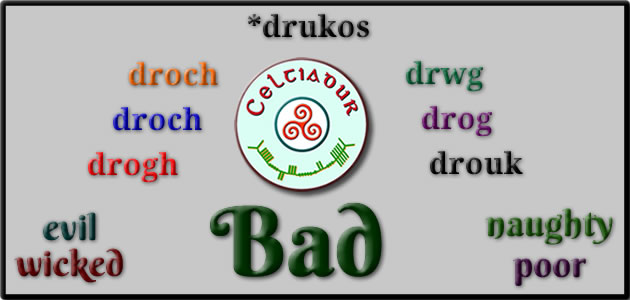
Proto-Celtic *drukos = bad
Gaulish druco- = bad
Old Irish (Goídelc) droch [drox] = bad, ill
Middle Irish (Gaoidhealg) droch = bad
Irish (Gaeilge) droch [drɔx] = bad, poor, evil, ill, un-
drochbhéas = vice, bad habit
drochmheas = contempt
drochobair = bad work, mischief
drochrath = ill luck, misfortune
drochrud = bad thing, inferior thing, bad/evil person, devil
drochrún = evil intention
drochuair = evil hour, unfortunate occasion
Scottish Gaelic (Gàidhlig) droch [drɔx] = bad, evil, wicked, mischievous, sad, calamitous, dark, obscure, secretive
droch-aigne = ill-will
droch-allaidh = libel
droch-chòrdadh = disagreement
droch-fhàistinneach = ominous
droch-mhèin = malice
droch-thuarach = sinister
Manx (Gaelg) drogh [drɔx] = evil, wicked, bad, abusive, unenviable, misfortune, badness, ill, sinister, vile
drogh aghtalys = misbehaviour, misconduct
drogh chaaynt = bad language, smut, swearing
drogh chonagh = misfortune
drogh hraghtey = to smuggle, smuggling
drogh oor = bad luck, ill-times, misfortune
Proto-Brythonic *drug = bad
Middle Welsh (Kymraec) druc, dryg, drỽc, drwc = bad
drycaruer , drygarver, drycarver = bad habit, abuse, misuse
drygdafod = scurrilous language, evil tongue
Welsh (Cymraeg) drwg [druːɡ] = bad, rotten, putrid; poor, piteous, wretched; sorry, grievous, sad; unfavourable, causing disquiet; injurious, harmful; unpleasant (taste); indecent, obscene (words); counterfeit, false; bad; harsh, cruel, severe, ruthless; corrupt, depraved, sinful, wicked, mischievous, naughty
strong>drwgabsen = malicious defamation, slander
drwgafer = bad habit, abuse, misuse
drwgdafod = scurrilous language, evil tongue
drwgenwog = infamous, notorious, disreputable
Middle Cornish (Cernewec) droc, drôg, drog = evil, wickedness, harm, injury, wrong, bad, wicked, hurtful, mischievous
droca, droga = worst
drocoleth = an evil deed, ill doing, injury, damage
droga, droaga = to do harm, hurt, injure
drogbrederys = evil-minded, malicious, envious
drogbres = ill will, spite, grudge
drogdavasec = ill-tongued, foul-mouthed, back-biting, reviling
drogger = ill report, infamy, reproach
droggeriit = infamous, reproachful
droggras = revenge, requital
drogober, drôk-ober = an evil deed, a crime
Cornish (Kernewek) drog [drɔ:g / dro:g] = bad, harm, hurt, ill, wrong, evil, invalid, nasty, naughty, wicked, wrong
drogdybi = to suspect
drogedh = vice
drogfara = to behave badly
drogga = wrong
droghandla = to abuse, mishandle
droglam = accident, crash, mishap
drogober = crime
drogboeror, drogoberores criminal, culprit
drogura = to smear
drokoleth = widkedness
drokter = wickedness
Middle Breton (Brezoneg) drouc = bad, illness, anger
drouc Ælez = the devil, bad angel
drouc auantur = misfortune, bad luck
droucyez, drouguyez = wickedness, malice, animosity
drouc =
drouc =
Breton (Brezhoneg) drouk [druːk] = bad, evil, naughty
droug [druːk] = bad, wickedness
drougiezh [druˈɡiːɛs] = wickedness, malice, animosity
droukrañsus [druˈɡrãsːys] = angry, resentful
droukaat = to become bad, make bad
drouziwezh [dru.ˈziː.wɛs] = defeat, disaster
dizrouk [ˈdi.zruk] = inoffensive, without anger

Etymology: possibly from the Proto-Indo-European *dʰrewgʰ- (to deceive) [source]. Word from the same roots include dream in English, droom (dream) and driegen (to deceive) in Dutch, Traum (dream) and trügen (to deceive, be deceptive) in German [source].

Proto-Celtic *dognawos = badly grown (?)
Old Irish (Goídelc) dona [ˈdona] = unlucky, unfortunate
Middle Irish (Gaoidhealg) dona = unfortunate, unlucky, wretched
donaide = ill-disposed, wretched
donán = miserable creature, wretch
donas = ill-luck, misfortune, calamity
donogad = act of making wretched
Irish (Gaeilge) dona [ˈd̪ˠɔn̪ˠə/ˈd̪ˠʌnˠə] = unfortunate, unlucky, bad, poor, wretched, ill
donacht = badness, wretchedmess, misfortune, illness
donagar = bad condition, misfortune
donaigh = to make worse, aggravate, become word, deteriorate, injure, maim
donaire = wretch
donaireacht = wretchedness
donaisín = little wretch, weakling
donas = ill-luck, misfortune, affliction, misery, mischief
Scottish Gaelic (Gàidhlig) dona [dɔnə] = bad, not well
donachas [dɔnəxəs] = mischief, harm, bad luck, mishap, devil
donachd [dɔnəxg] = mischief, harm, bad luck, mishap
donad [dɔnəd] = degree of badness, severity
donadas [dɔnədəs] = badness, evil
donas [dɔnəs] = mischief, harm, bad luck, devil
donasag [dɔnəsag] = imp
Manx (Gaelg) donney [ɔlk] = calamitous, ill-advised, inauspicious, unfortunate, unlucky, very ill, woeful, unhappy
donnan = dolt, dunce, stupid person, worse
donnys = affliction, bad luck, mischief, woe

Etymology: possibly from the Proto-Indo-European *ǵneh₃- (to recognise, know) [source]. Words from the same root include can, canny, gnome, ignore, know and quaint in English [source].

Proto-Celtic *ulkos = evil, bad
Old Irish (Goídelc) olc [olk] = bad, evil
olcas = badness
Middle Irish (Gaoidhealg) olc, olcc = evil, bad, wrong, misfortune
olcach = hurtful, injurious, harm, injury
olcas = badness
Irish (Gaeilge) olc [ɔl̪ˠk] = evil, harm, bad, harmful, poor, wretched, ill-disposed, hardly, scarcely
olcach = causing evil, harmful, injurious.
olcas = badness, evil, bad state, bad nature, spite
Scottish Gaelic (Gàidhlig) olc [ɔl̪ˠxg] = evil, wicked, bad, infamous, ill, iniquity
olcag [ɔl̪ˠxgag] = little brat (female)
olcair [ɔl̪ˠxgɛrʲ] = evildoer
olcas [ɔl̪ˠxgəs] = wickedness, badness
Manx (Gaelg) olk [ɔlk] = bad, evil, ill, injury, lousy, truculence, unfavourable, vicious, wicked, mischief, naughty, sinful
olkeyr = criminal, culprit, evil-doer, offender, mischief-maker
olkid = badness, evilness
olkys = badness, evilness, iniquity, mischief
olkyssagh = baleful, elfish, diabolical, iniquitous, malicious, malignant, mischievous, naughty, vicious, wicked

Etymology: from the Proto-Indo-European *h₁elḱ- (bad [?]) [source]. Words from the same root include ill and possibly ulcer in English, illa (badly, poorly, not well) in Swedish, and ilkeä (bad, mean, wicked, evil) in Finnish [source].

Sources: Wiktionary, Am Faclair Beag, Online Manx Dictionary, Teanglann.ie, eDIL – Electronic Dictionary of the Irish Language, In Dúil Bélrai English – Old Irish glossary, Geiriadur Prifysgol Cymru, Gerlyver Kernewek, Lexicon Cornu-britannicum: A Dictionary of the Ancient Celtic Language of Cornwall, Dictionaire Favereau, TermOfis, Le dictionnaire diachronique du breton, Etymological Dictionary Of Proto Celtic